Compact furniture: useful or quickly too bulky?
Hi everyone, Julie here. Compact furniture is useful if it genuinely clears the way and meets a need; otherwise, it can quickly become bulky. To choose well, measure the room, check how you’ll use it every day, and keep the space comfortable to move around in. In small spaces, the right furniture combines space-saving design, built-in storage, and ergonomics without overcrowding the interior.
Top priorities:
- Measure the room, doors, and walkways before making any purchase.
- Identify what’s really missing: seating, storage, a bed, or a workspace.
- Choose multifunctional furniture only if you’ll use its different functions often.
- Make sure drawers, doors, and fold-out components open without blocking the way.
- Keep an area clear to preserve everyday comfort.
A compact piece of furniture won’t magically make a room bigger: it mainly helps you make better use of every square foot. To compare your options, check out these tips on compact furniture for studios and ideas for creating a cozy small living room.
Compact furniture: when is it really useful?
In a studio apartment, narrow entryway, or shared bedroom, every piece of furniture has to earn its place. A storage bench, a bed with drawers, or a fold-down desk can replace several items and help you make the most of your space.
Function matters just as much as dimensions. An extendable table is useful if you regularly have people over; if it stays extended all the time, it may simply get in the way. “The best piece of furniture is one that fits your habits, not just your floor plan.”
Solutions that free up floor space
- Under-bed storage: handy for comforters, out-of-season clothes, or boxes.
- Sliding doors: useful in a narrow hallway where a swinging door would encroach on the walkway.
- Fold-down desk: it folds away after work, freeing the room for its other uses.
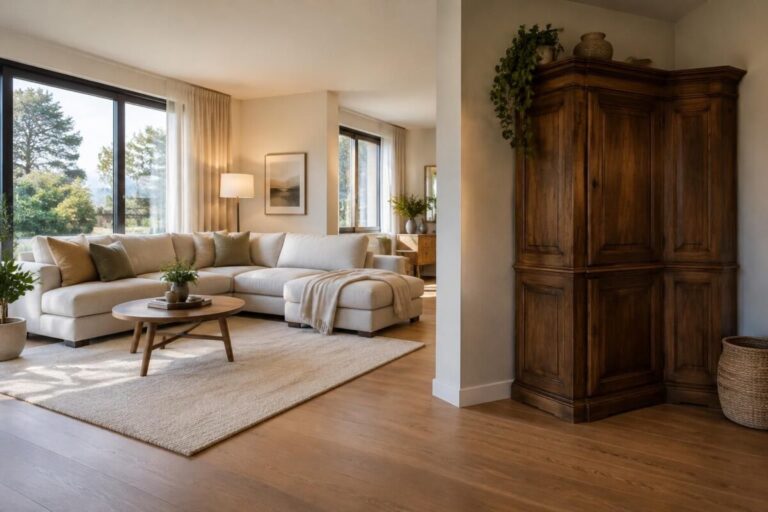
- Furniture designed for corners: custom drawers or shelves can make use of a tricky nook.
- Loft bed: it frees up floor space for a desk or wardrobe, if ceiling height allows.
In a small bedroom, a loft bed can turn an unused area into a workspace. A common home-design example: a simple fold-down desk lets one room serve as both a bedroom and a living room. The benefit is measured by how the space is used, not just by what the floor plan shows.
When compact furniture becomes bulky
A piece of furniture may look small in a store, but its moving parts often need more room once it’s in place. Think about open drawers, pulled-out chairs, and the space needed to move around it. A reduced depth can also make storage impractical or seating uncomfortable.
Multifunctional furniture isn’t always the best choice. If a sofa bed is heavy to unfold or a table turns every meal into a rearranging exercise, the solution may make everyday life more complicated. Sometimes a simple, well-proportioned piece that’s easy to use is a better choice.
| Need | Compact option | What to check |
|---|---|---|
| Storage in an entryway | Narrow cabinet or hooks with a bench | Its depth shouldn’t reduce the walkway |
| Create a workspace | Fold-down desk or wall-mounted shelf | Allow for comfortable seating and posture |
| Host a dinner | Extendable or folding table | Make sure there’s enough space around it when open |
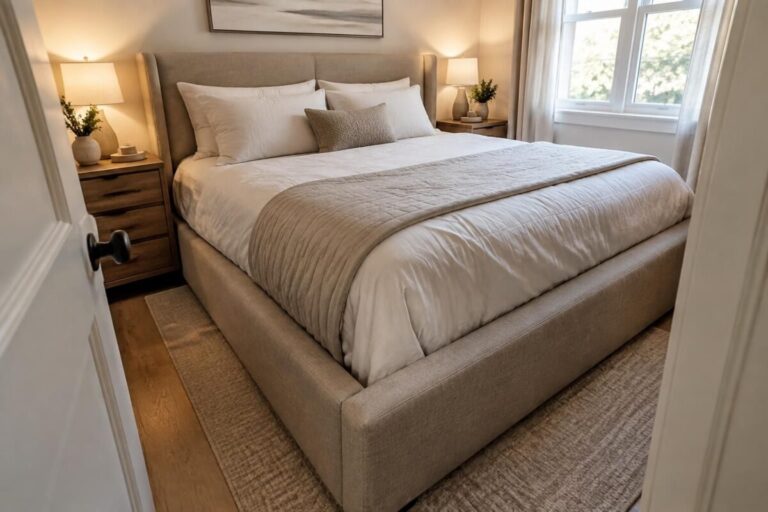
| Add storage in a bedroom | Bed with drawers or storage boxes | Check that the drawers can open all the way |
| Furnish a room under a sloped ceiling | Low cabinet or custom storage | Choose a height that suits the items you’ll store |
Choose the right size and keep pathways clear
Before buying, mark out the furniture’s footprint on the floor with masking tape. You’ll immediately see whether the door opens, the walkway stays clear, and the space still feels comfortable. This simple check can prevent a lot of mistakes.
If it’s a studio where different functions need to coexist, opt for a multifunctional piece that’s easy to use. If the room is already well furnished, choose just one suitable storage piece and leave some space free.
A three-step process
- Step 1: Measure the room, access points, and walkways, then note the maximum acceptable dimensions.
- Step 2: Define the furniture’s primary use and any secondary functions that will genuinely be useful.
- Step 3: Test its position on the floor and check its ergonomics before buying it or having it installed.
In rooms with unusual layouts, a cabinet under a sloped ceiling or storage built around a doorframe can make use of an often-wasted area. A craftsperson can help adjust the dimensions, but a custom solution is only worthwhile if it meets a real need.
Light decor without sacrificing comfort
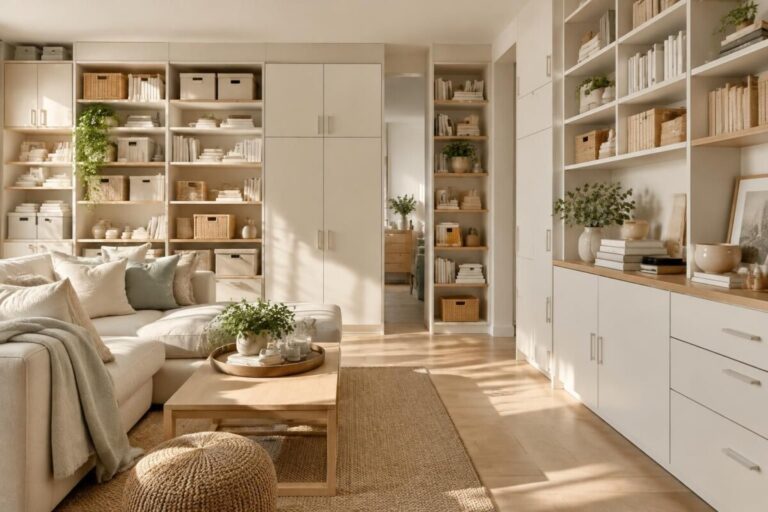
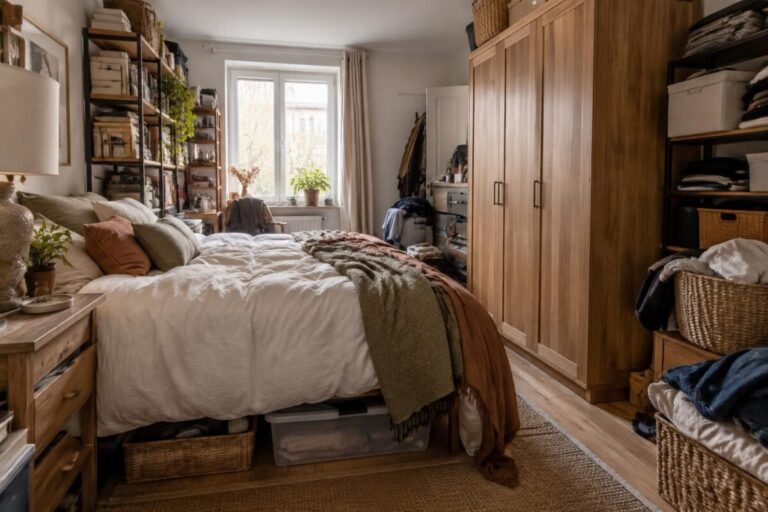
Furniture isn’t everything. Light colors, well-distributed lighting, and closed storage help make a room feel more orderly. Conversely, too many small pieces of furniture scattered around can make a room feel cluttered, even if each one takes up little space.
Also regularly sort through your belongings and clothes. Fewer things to store often means you need less furniture. An uncluttered space can feel more inviting than a room filled with storage solutions.
Frequently asked questions about compact furniture
Is compact furniture suitable for every small room?
Not always. Check its dimensions in actual use, including how doors and drawers open, as well as the space around it.
Which piece of furniture is most helpful for saving space in a studio apartment?
Multifunctional furniture can be effective if it serves regular needs, such as a fold-down desk or a bed with built-in storage. The choice depends on your needs and the room’s layout.
How can you keep a small piece of furniture from looking bulky?
Limit the number of pieces, choose suitable proportions, and keep walkways clear. Closed storage can also reduce the impression of clutter.
Is custom-made furniture essential?
No. It’s mainly useful for making the most of a slope, a corner, or an unusually shaped space. For a standard layout, well-chosen standard dimensions may be enough.
Thanks for reading; Julie. P.S. Leave a comment, and I’ll reply as soon as I can!