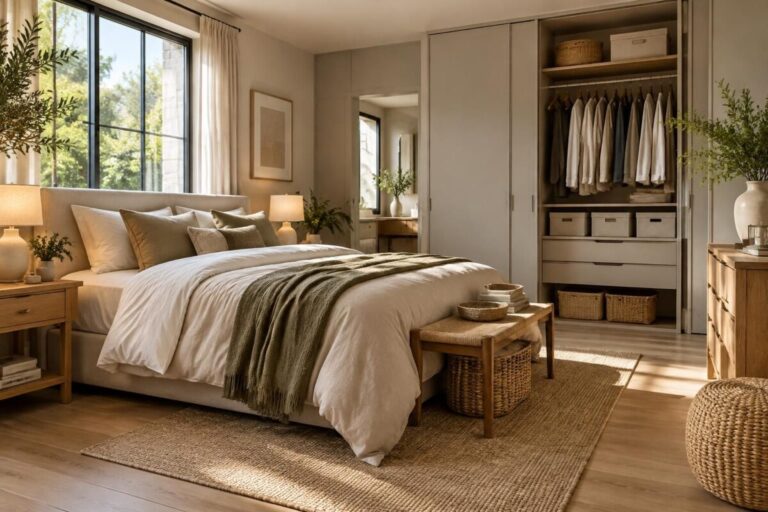

Closed storage: the real key to a more peaceful living room
Hello, Julie here.
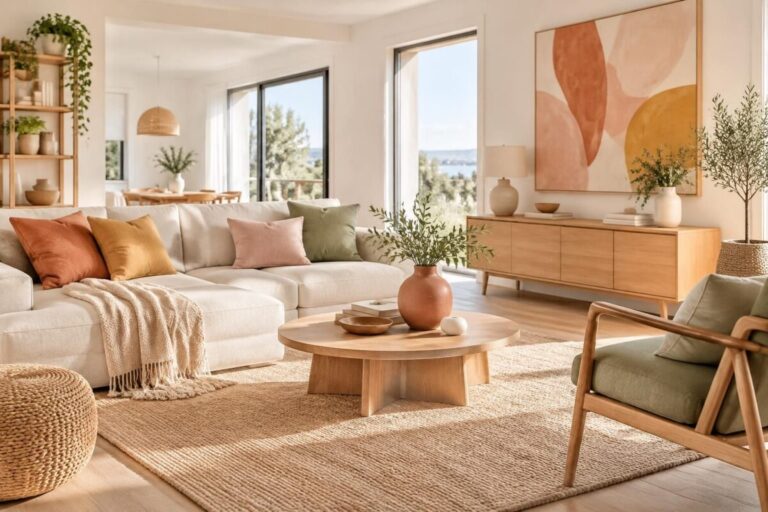
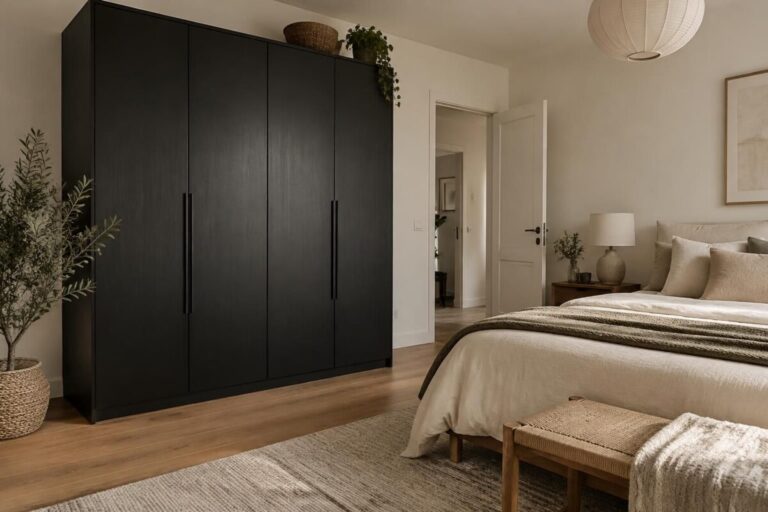
To make your living room feel more peaceful, opt for closed storage that hides clutter while keeping essentials within easy reach.
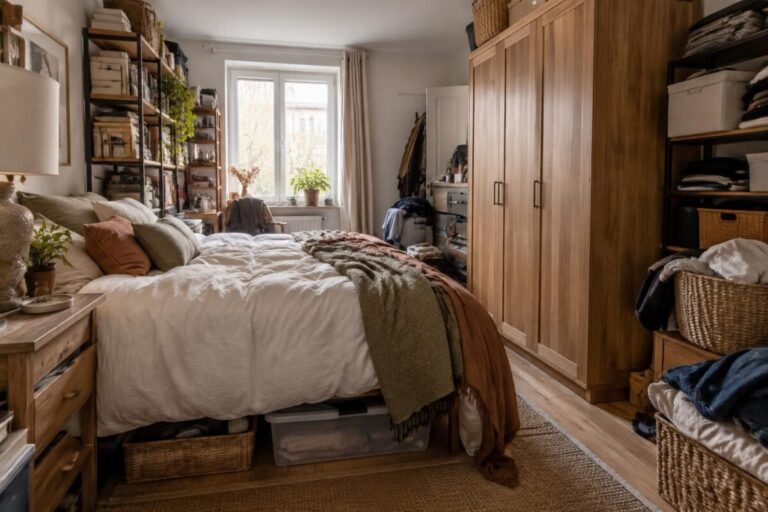
When magazines, throws, and small accessories are left in plain sight, the room can quickly feel cluttered. Closed storage restores visual harmony and makes it easier to keep things organized, without sacrificing comfort.
The goal isn’t to hide everything, but to choose what deserves to be displayed. Keep a few decorative items on show; give everything else a simple spot where it’s easy to find.
Things to do now
- Identify areas that are overflowing, such as the TV stand, coffee table, or desk area.
- Choose storage furniture that’s the right size for the room, such as a low sideboard in a small living room.
- Sort items by category: papers, accessories, games, books, and textiles.
- Protect natural light by keeping windows and walkways clear.
- Keep some open storage to showcase books or carefully chosen objects.
To explore this idea further, discover how closed storage can ease the strain on a living room that’s hard on the eyes and its role in reducing visual stress.
Why closed storage makes a living room feel calmer
Every object left in plain sight draws a little attention. By putting away things that don’t need to be seen, you reduce visual distractions and make the room feel more restful at first glance.
In a small space, this helps prevent the room from feeling overwhelming. In a large living room, closed storage gives the space structure and creates a clear place for everyday items.
Imagine a living room where the remote controls, papers, and throws are left on the coffee table or sofa. A closed sideboard and a storage compartment built into a chaise can clear these surfaces while keeping everything accessible.
Closed furniture or open shelving: finding the right balance
Cabinets and drawers easily conceal everyday items and take little effort to keep looking tidy. Open shelves, on the other hand, showcase books and decorative pieces, but look best when they’re not overloaded.
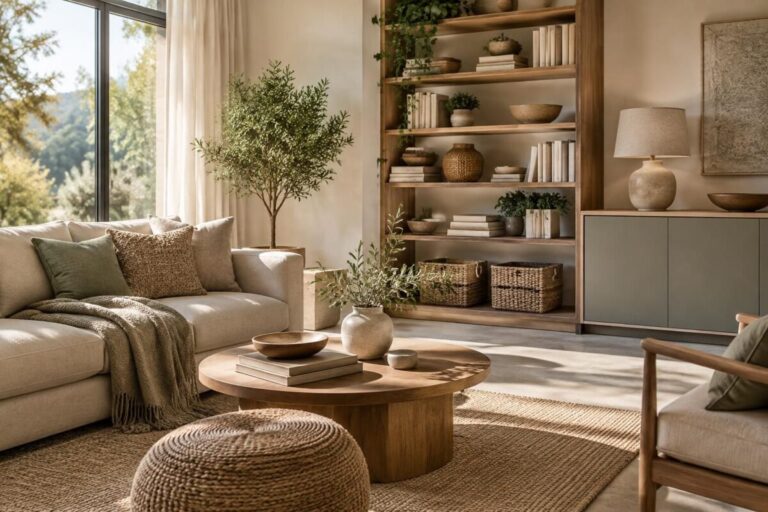
A bookcase with doors on the lower section often offers a good compromise: practical items disappear behind the doors, while a few carefully chosen pieces remain on display.
| Consideration | Closed storage | Open storage |
|---|---|---|
| Visual effect | A calmer look with items concealed | Items on display; lively decor that can sometimes feel cluttered |
| Practical use | Well suited to accessories, papers, and textiles | Convenient for frequently used or decorative items |
| Maintenance | Contents are less exposed to dust | Surfaces and items need regular dusting |
| Best balance | Best for items that clutter the view | Best reserved for a selection of favorite items |
Storage can also be built into furniture: a coffee table with a compartment, an end table with a drawer, or a sofa with a storage compartment. These multifunctional pieces free up space without adding a bulky cabinet.
Easy-to-maintain organization
Closed storage only makes a room feel calmer if its contents are easy to manage. Baskets, boxes, and dividers prevent clutter from simply being shifted behind closed doors.
Give each area a specific purpose: throws near the sofa, papers in a dedicated drawer, and games in an accessible storage unit. A quick daily tidy-up is often all it takes to keep the space feeling peaceful.
Three steps to transform your living room
- Look for clutter hotspots. For a few days, notice which surfaces items keep accumulating on: the coffee table, TV stand, or armchair.
- Choose the right storage. Measure the available space and opt for a sideboard, storage units, or a bookcase with cabinets. Adjustable shelves can adapt as your needs change.
- Sort by category and try out a routine. Put items in labeled boxes, then take a few minutes to return everything to its place.
A common mistake is choosing a piece of furniture that’s too large in an effort to hide all the clutter. It’s better to start with one area, sort things thoughtfully, and keep only what you use or what contributes to a sense of well-being at home.
Decluttering doesn’t mean living in an empty room. It’s about clearing surfaces and choosing pared-back decor that lets the things you care about breathe.
Closed storage that suits your everyday needs
If you’re short on space, a storage compartment beneath a chaise or built into the sofa can hold throws and cushions. In a larger living room, a low sideboard or a bookcase with closed fronts can organize several categories without obstructing the flow of movement.
To keep a personal touch, reserve a niche or shelf for a few favorite objects. This contrast between discreet storage and carefully chosen decor creates a more natural visual harmony than a space that’s closed off entirely.
Is closed storage suitable for a small living room?
Yes. A low sideboard, built-in drawers, or a storage chest can conceal items without adding lots of bulky furniture. Choose appropriately sized pieces and keep walkways clear.
How can I keep cabinets from getting cluttered?
Assign a category to each space and use baskets or dividers. A quick, regular tidy-up helps keep items easy to find.
Should I get rid of all open storage?
No. Open shelves are useful for displaying a few books or decorative objects. The key is to keep them uncluttered and reserve closed storage for everyday items.
Do closed cabinets make a living room brighter?
They don’t increase the amount of light, but they can help it flow more freely if you avoid blocking windows and cluttering surfaces.
I hope you found these tips helpful. See you soon! — Julie