Closed storage: the real solution to visual stress
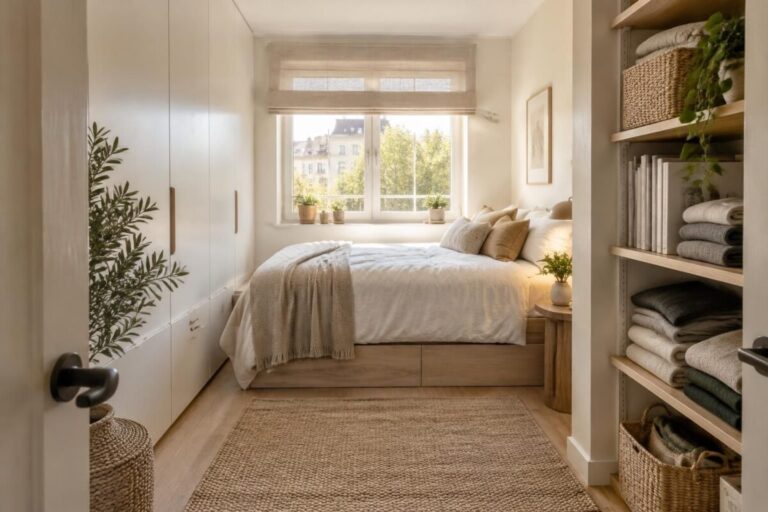
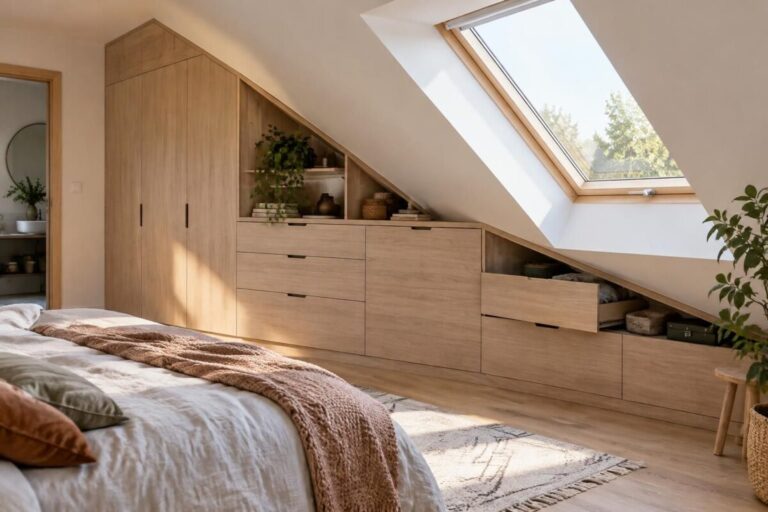
Hi, Julie here. Closed storage reduces visual stress by concealing objects and creating more uniform surfaces. It doesn’t make clutter disappear, but it helps you manage it better and make the room feel calmer. A few well-chosen pieces are enough to create a clearer space without giving up personal decor.
Try this now
- Declutter a visible surface, such as the coffee table or entryway.
- Group small items in boxes or baskets tucked behind a door.
- Choose a closed storage piece that’s proportionate to the room, with simple fronts.
- Reserve open shelves for a few carefully chosen decorative items.
- Keep light flowing through the room by avoiding placing a tall piece of furniture in front of a window.
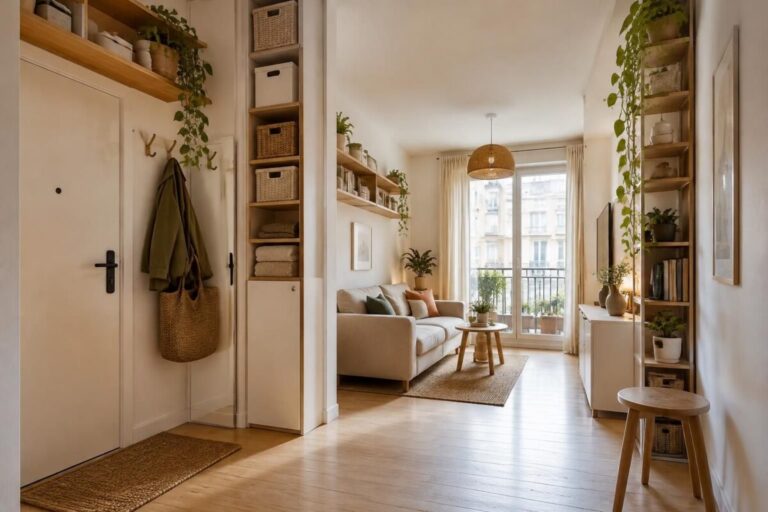
Start with an area that often catches your eye: the piece of furniture by the entryway, the living room sideboard, or the desk. For more targeted advice, discover closed storage for a living room that’s visually tiring and ideas for decluttering an overcrowded hallway.
Why closed storage reduces visual stress
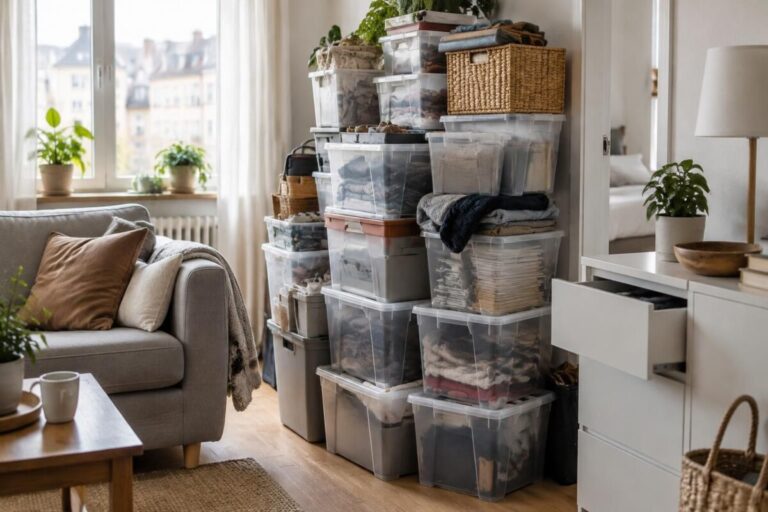
Open storage puts objects, their shapes, and their colors on display. Even when everything is useful, the accumulation can make it feel as though there’s nowhere for your eyes to rest. A closed front, by contrast, creates a more uniform surface and contributes to pared-back decor.
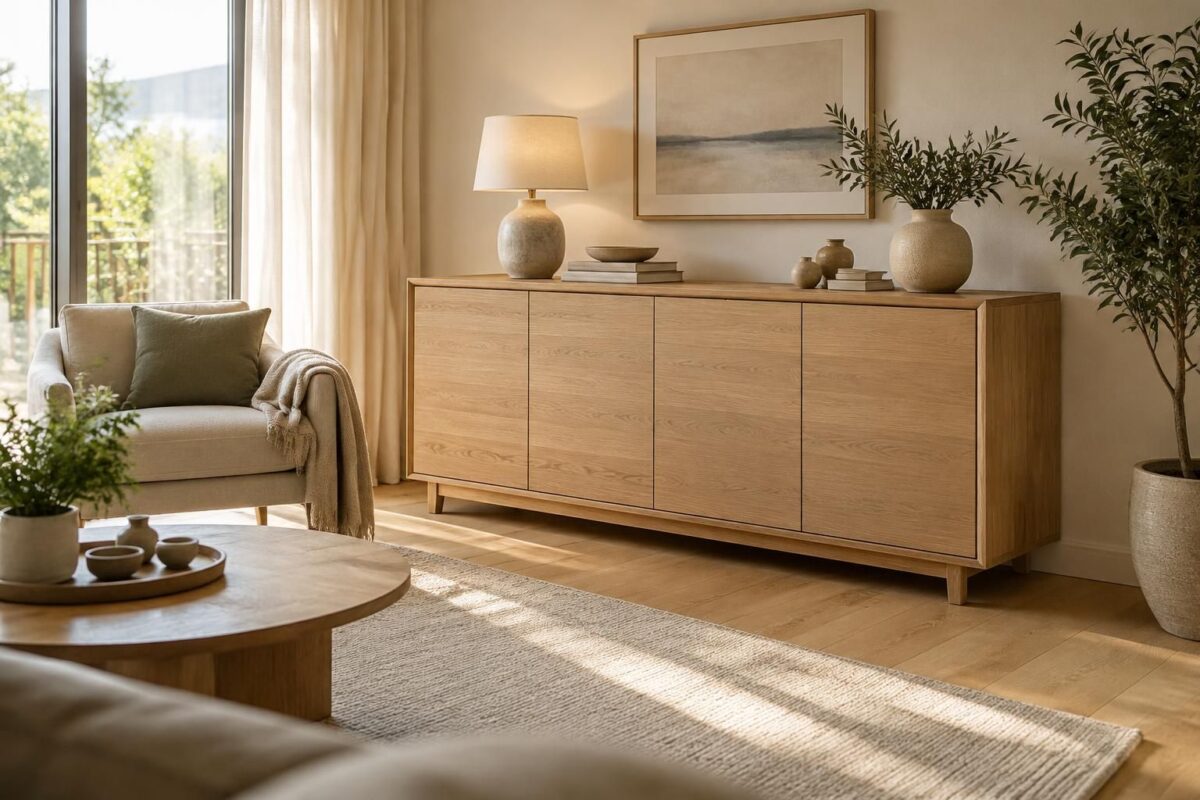
In a small living room, for example, replacing a shelf filled with games, cables, and papers with a closed sideboard can make the room feel lighter. The floor space doesn’t change, but your eyes take in fewer details: this visual control helps create calming spaces.
Discreet storage, not a magic solution
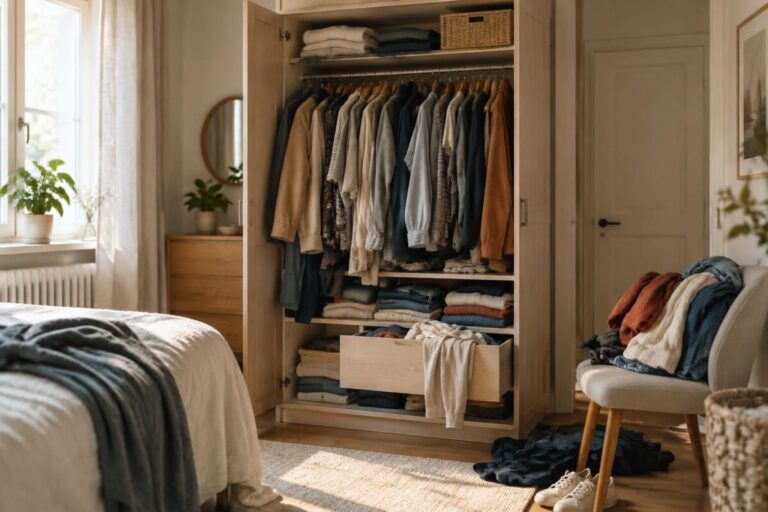
Closing the doors helps contain visible clutter, but it doesn’t replace organizing the inside. If items are simply piled into the furniture, the drawers quickly become difficult to use and the storage loses its everyday usefulness.
A simple method is to assign a place to each category: keep cables together, put remotes in one compartment, and store documents in a dedicated tray. This clutter management makes things easier to find and supports well-being at home.
Open or closed storage: what effect does each have on a room?
The two options can work together. Open storage showcases a few favorite books or objects, while closed furniture holds everyday accessories that are less decorative or more numerous.
| Criterion | Open storage | Closed storage |
|---|---|---|
| Effect on the eye | Displays objects and their colors | Creates a more visually uniform front |
| Access to belongings | Quick and direct | Requires opening a door or drawer |
| Everyday tidiness | Requires regular attention to presentation | Conceals the contents, while still requiring interior organization |
| Recommended use | A few carefully chosen objects | Everyday accessories and scattered small items |
In a compact home, a closed piece of furniture doesn’t need to take up an entire wall. A low sideboard may be enough in the living room; a narrow cabinet can make use of the height in a hallway. The right choice keeps pathways clear and preserves a sense of lightness.
Adapt storage to the light and flow of the room
In a room with little natural light, choose light-colored fronts with a matte or satin finish. Glossy surfaces can reflect light, but they show marks more easily; an easy-care finish is often more practical in high-traffic areas.
If the living room is small, a low piece of furniture placed near a window preserves the light. In a hallway, doors without protruding handles or with push-to-open mechanisms create a cleaner line and reduce snags as you pass by.
A three-step process to give your eyes a rest
- Identify the cluttered area. Notice where objects accumulate and remove anything you no longer use or that doesn’t belong in the room.
- Choose the right piece of furniture. Measure the available width and depth, then select closed storage that won’t obstruct the walkway or block the light.
- Organize the inside and adjust the lighting. Sort objects by category, then, if needed, add a lamp or a mirror positioned to reflect light without obstructing the flow of the room.
Salomé, for example, can keep a few books and a plant on a shelf while putting cables and games away in closed storage. This balance preserves a personal touch without multiplying the elements in your field of vision: a small step toward everyday serenity.
Details that enhance the calming effect
Plain fronts, discreet handles, and a color close to the wall’s reduce visual contrast. There’s no need to make the whole room uniform: a few well-chosen decorative objects are enough to give it character.
A mirror can also amplify the light when placed opposite a window or a light source. It complements storage, but doesn’t replace decluttering: it’s best to clear surfaces before adding a new item.
The key takeaway: hide what creates visual noise, display only what you want to see, and keep every item easy to find.
Is closed storage suitable for every room?
It’s particularly useful in small living rooms, bedrooms, and hallways, where visible objects can quickly clutter the view. Choose a piece of furniture that suits the available space and allows for easy movement.
Should you get rid of all open storage?
No. A mix works well: closed furniture holds everyday accessories, while open shelves showcase a few books or decorative objects.
Do closed fronts make a room darker?
Not necessarily. Light-colored fronts and furniture positioned so it doesn’t block windows preserve brightness. A reflective finish can bounce light around, but it requires more attention to keep marks at bay.
How can you prevent clutter from building up behind closed doors?
Assign a place to each category, use boxes or dividers, and take a few minutes to put things back in their place regularly.
Thanks for reading! Feel free to share your thoughts in the comments. — Julie