Soft colors: why your interior still feels cold
Hello, it’s Julie. Soft colors alone aren’t enough to create a warm atmosphere: lighting, materials, and contrast matter just as much.
A room often feels cold when pastel shades are paired with bluish lighting and smooth surfaces. A few targeted adjustments can transform the atmosphere without repainting the whole room.
Try this right away
- Replace bulbs that are too white with warm lighting, around 2,700 to 3,000 K.
- Test the color on a large sample and look at it in the morning, afternoon, and evening.
- Add a natural material, such as wood, linen, wool, or rattan.
- Warm up smooth surfaces with a rug, curtains, or cozy textiles.
- Create a subtle contrast with a deeper shade, such as a light terracotta or honey brown.
To choose a soothing palette without making the space feel even cooler, also discover these soft colors that reduce eye strain and these powdery shades that can make a room feel dull.
Why soft colors can sometimes make a room feel cold
A color is never perceived on its own. It changes depending on the room’s orientation, artificial lighting, the materials around it, and neighboring colors.
A pale gray or rosy beige can feel welcoming in golden light, then look dull under a white bulb. In a north-facing room, the natural light, which is often cooler, makes this effect even more noticeable.
Lighting reveals the undertones in pastel shades
Off-white can lean yellow, pink, or gray. If it has cool undertones, it heightens the feeling of coolness when paired with a gray floor or metal furniture.
Before choosing a paint color, look at a sample directly on the wall. A color seen on a screen or in a store won’t necessarily look the same in your home.
Smooth materials can make interior decor feel cooler
Glass, chrome-plated metal, and lacquered surfaces reflect light, but add little visual texture. In large amounts, they can make a room feel more distant, even if its walls are cream or dusty pink.
Wood, linen, and wool, on the other hand, absorb and diffuse light more softly. These natural materials add texture and contribute to visual comfort.
The trap of tone-on-tone soft colors
A decor scheme made up almost entirely of white, light gray, and pastel blue can lack depth. The problem isn’t the softness of the shades, but the lack of contrast and variation in texture.
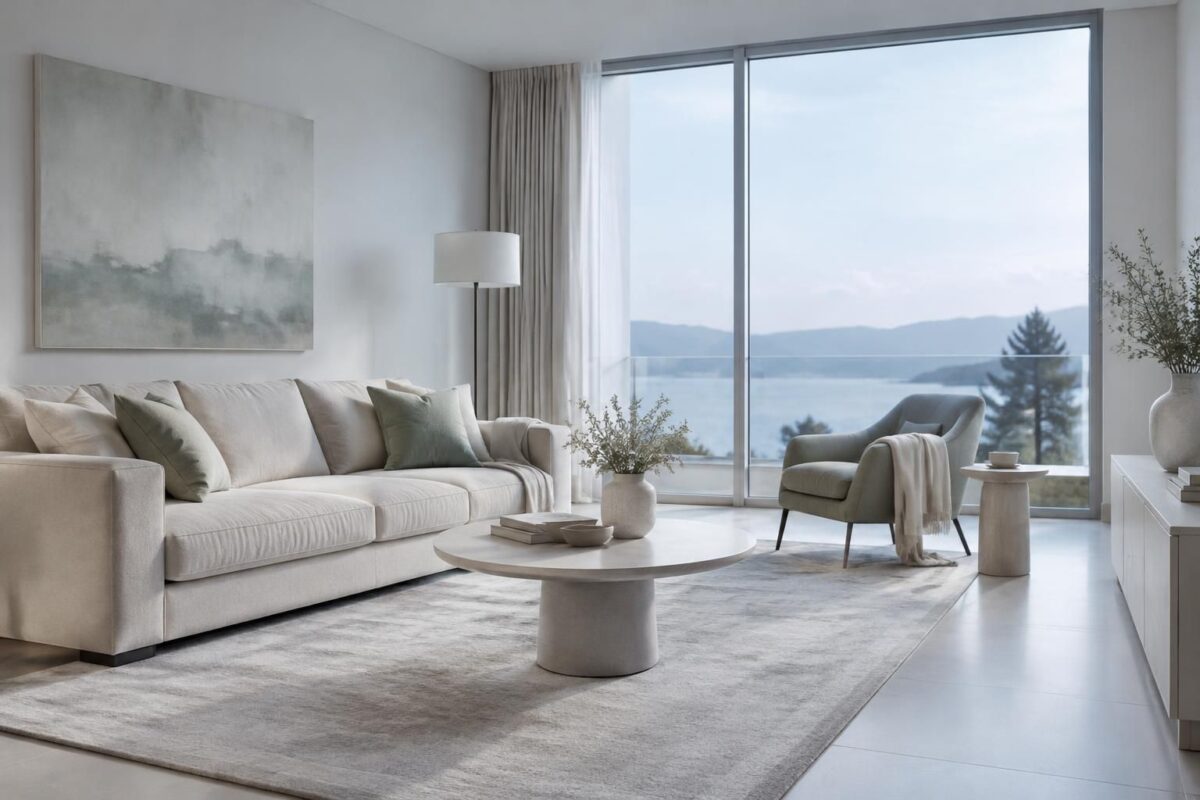
Picture Léa’s living room: pearl-gray walls, a light-gray sofa, white curtains, and a concrete-effect floor. By replacing the white bulbs with warmer lighting, then adding a caramel-colored throw and a wooden table, she keeps her soft palette while giving the room more depth.
| What makes the room feel cold | What can warm it up | Why it works |
|---|---|---|
| White or bluish light bulb | Bulb around 2,700 to 3,000 K | The light looks more golden and welcoming. |
| Smooth, shiny surfaces everywhere | Wood, wool, linen, or rattan | Textures add depth and a feeling of softness. |
| Uniform palette with no accent color | A subtle contrast, such as honey brown | The deeper shade defines the space without making it feel heavy. |
| Very sheer curtains in a dimly lit room | More enveloping textiles in a warm shade | They create a more comfortable visual frame. |
Warm up a cold-feeling room in three steps
You don’t need to change all your decor. Take it one step at a time to see what really transforms the atmosphere.
- Adjust the lighting. Start by replacing cool bulbs and add an accent lamp near the sofa or in a dark corner.
- Introduce texture. Add a rug, throw, or cushions in linen, wool, or heavy cotton. Two or three well-chosen items may be enough.
- Add a carefully chosen contrast. Pick an accessory in a warmer shade, then check that it goes with the existing floor and furniture.
To maintain a warm atmosphere, keep a light-colored base and use accents on a few easy-to-move items. That way, you can adjust the room without taking on major renovations.
Frequently asked questions about soft colors and a cold-feeling room
What soft color should I choose to warm up a room?
Beige with yellow or rosy undertones, off-white, or dusty pink can warm up a room. Always look at a sample in your home, as the light and neighboring colors affect how it looks.
What color temperature should I choose for a living room?
A bulb around 2,700 to 3,000 K generally gives off warmer light, suited to a relaxing atmosphere. Cooler light may work for certain tasks, but feels less enveloping in a space meant for rest.
How can I warm up my decor without repainting?
Change the bulbs, add cozy textiles, and introduce one or two natural materials. An accessory in a deeper shade can also create a pleasing color contrast.
Do pastel shades always make a room feel cold?
No. Pastel shades can feel warm if their undertones, the lighting, and the surrounding materials work well together. The risk mainly comes from a palette that’s too uniform or paired with cool lighting.
Thanks for reading! If this topic resonates with you, share your experience in the comments. — Julie