3 Pieces of Furniture That Can Save a Small Bedroom Without a Closet
Hi, Julie here. For a small bedroom without a closet, go for three space-saving pieces of furniture: a storage bed, a compact wardrobe, and a narrow dresser.
The right trio makes use of vertical space, frees up the floor, and stores everyday belongings without making the room feel crowded. The idea isn’t to fit everything in at all costs, but to give each piece of furniture a clear purpose.
What to do now to save space
- Measure the width of walkways and the available space before making any purchases.
- Sort your clothes to separate seasonal items from the ones you wear every week.
- Reserve the space under the bed for duvets, linens, and out-of-season clothes.
- Choose a compact wardrobe that makes use of vertical space rather than depth.
- Keep visible surfaces clear to avoid a cluttered look.
These choices work best when each piece of furniture meets a specific need. To take your room setup further, also check out these tips on storage without a closet and the mistakes that make a room look smaller in this guide to storage in a small bedroom.
Three space-saving pieces of furniture for a small bedroom without a closet
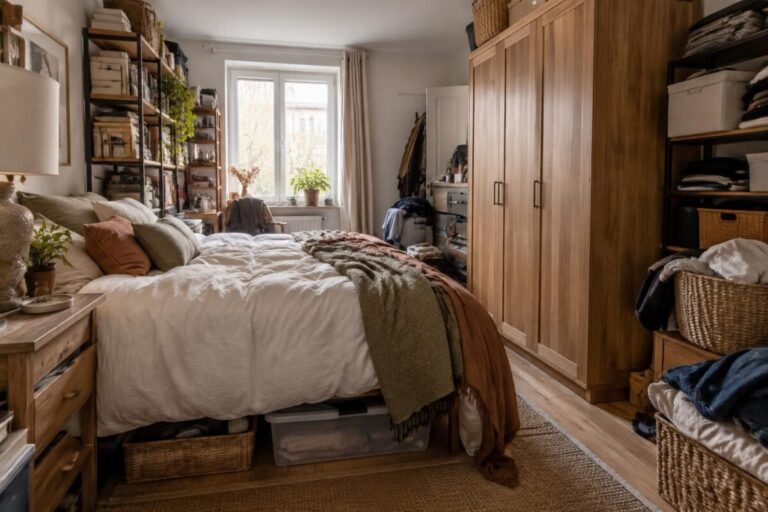
Imagine a 9 m² bedroom where clothes pile up on a chair and an overly deep piece of furniture blocks access to the bed. To reclaim space, it’s better to combine concealed, high-capacity storage, vertical storage, and a compact occasional piece.
1. The storage bed, to make use of the space under the mattress
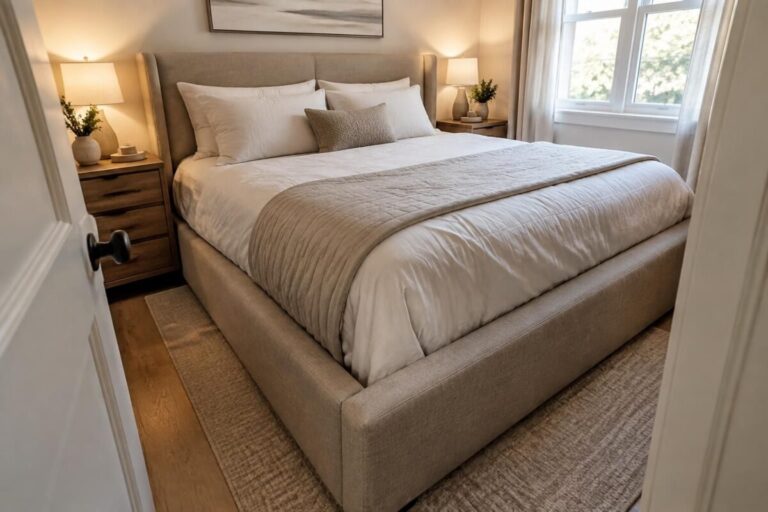
A storage bed holds items that take up space but aren’t used every day: duvets, extra pillows, or out-of-season clothes. It avoids adding visible storage bins and keeps the floor clear.
Before choosing this style, make sure the lift mechanism can open without hitting a wall or another piece of furniture. If accessing the storage compartment is difficult, built-in drawers or flat boxes may be more practical.
2. The compact wardrobe, for storing items vertically
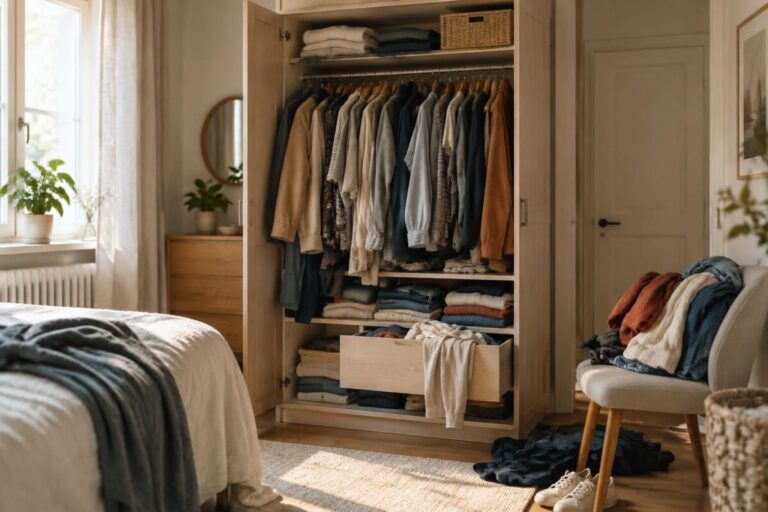
A compact wardrobe can replace a built-in closet if it has a suitable hanging section and accessible shelves. Choose a shallow depth that accommodates your hangers, then make use of the height with boxes for accessories or seasonal linens.
If you mostly wear short garments, a double hanging rail can double the capacity without taking up more width. An open wardrobe or a clothes rail can also work for a few everyday outfits, as long as you limit the number of items on display.
3. The narrow dresser, for smaller clothes and accessories
A narrow dresser can often fit beside the bed or in a corner without getting in the way. It holds underwear, T-shirts, and accessories; choose drawers that open easily and a moderate depth so it doesn’t encroach on the walkway.
This multifunctional piece can also serve as a nightstand if it’s the right height. However, avoid piling things on top: a few essentials are enough to maintain a calm feel.
Which piece of furniture should you choose for your needs?
The choice mainly depends on what you need to store and how much space is actually available. In a narrow bedroom, a shallow, well-organized piece of furniture is often more useful than a large wardrobe that’s difficult to move around.
| Piece of furniture | Ideal for | What to check before buying |
|---|---|---|
| Storage bed | Duvets, linens, and out-of-season clothes | The space needed to open the storage compartment |
| Compact wardrobe | Hanging and folded clothes | Depth, height, and interior layout |
| Narrow dresser | Smaller clothes and accessories | Drawer width and clearance around the furniture |
Wall shelves complement these three pieces without taking up floor space. Use them for books or lightweight baskets, keeping everyday items within easy reach.
Arrange the furniture without cluttering the room
A good combination can lose all its appeal if it blocks the door or makes it harder to get to the bed. To visualize the layout, mark out the furniture on the floor with painter’s tape: you’ll quickly see whether the drawers and doors can open.
- Measure and sort. Note the room’s dimensions, then sort clothes into hanging, folded, and seasonal items.
- Position the main storage pieces. Put the storage bed where it allows comfortable access, then reserve the clearest wall for the compact wardrobe.
- Add the extras. Place the narrow dresser beside the bed or in a corner, then use the walls for shelves and hooks.
A common pitfall is to buy a clothes rail first, then add several small storage pieces around it. The room fills up quickly: it’s better to start with the storage bed and wardrobe, then add only the piece that meets a need that’s still unmet.
Keep your bedroom tidy every day
Assign a permanent place to everyday items: clothes worn during the week, accessories, and bed linens. A small basket can temporarily hold items that need putting away, but empty it regularly so it doesn’t become permanent storage.
Sorting through your belongings at the start of each new season also helps keep things from piling up. Store rarely used items up high and keep what you wear often within easy reach: a simple system is easier to maintain.
Practical questions about furniture for a bedroom without a closet
Which piece of furniture should you choose first for a bedroom without a closet?
Start with a storage bed if you mainly need more space for linens and seasonal items. If you need to hang clothes, choose a compact wardrobe that fits your measurements instead.
Is a clothes rail suitable for a small bedroom?
Yes, for a few clothes that you wear regularly. Keep it light and tidy; an overloaded open wardrobe can make the room feel even more cluttered.
How can you store clothes without cluttering the floor?
Combine under-bed storage, a compact wardrobe that makes use of vertical space, and a narrow dresser. Wall shelves can hold lightweight baskets and accessories.
What depth should you choose for a narrow dresser?
Measure the available space and make sure the drawers can open without getting in the way. The right model meets your needs while keeping the walkway clear.
Thanks for reading! Feel free to share your thoughts in the comments. — Julie