Open shelving: convenient, but too stressful for everyday life?
Hi, it’s Julie.
Yes, open storage can become stressful if everything is on display, but a few simple choices are all it takes to make it practical and calming.
The secret: display less, organize by use, and set aside a place for less decorative items. That way, you can access your belongings without turning every shelf into a list of things to put away.
Things to do right away
- Sort through your belongings: keep useful or much-loved items within sight.
- Limit the quantity: leave some of your open shelves clear.
- Group by function: bring together items that serve the same purpose.
- Add baskets: they hide small items without making things harder to put away.
- Mix open and closed storage: conceal things you rarely use or that look cluttered.
Open storage works best when it suits your habits rather than aiming for a perfect display. To compare your options, check out these tips on open storage that looks too cluttered and open storage that gets messy too quickly.
Open storage: when easy access becomes a source of stress
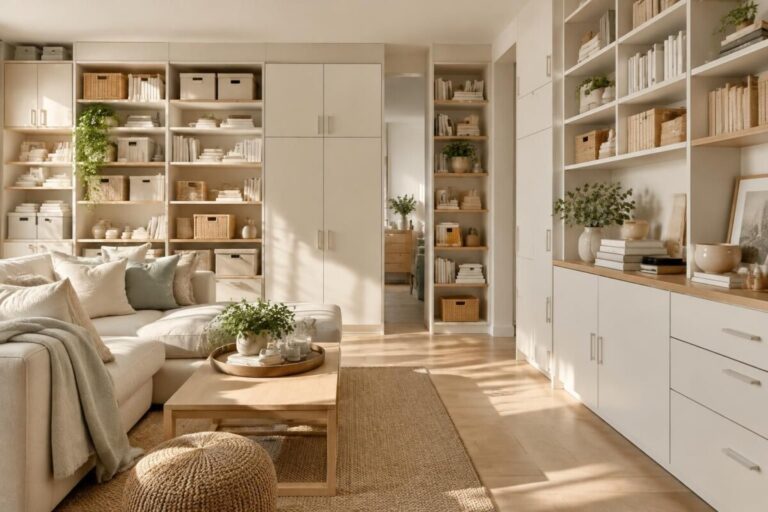
Open storage can make a room feel lighter by letting your eyes and the light flow through. But every item on display also becomes part of the decor: a letter left on a shelf or scattered accessories can quickly create visual clutter.
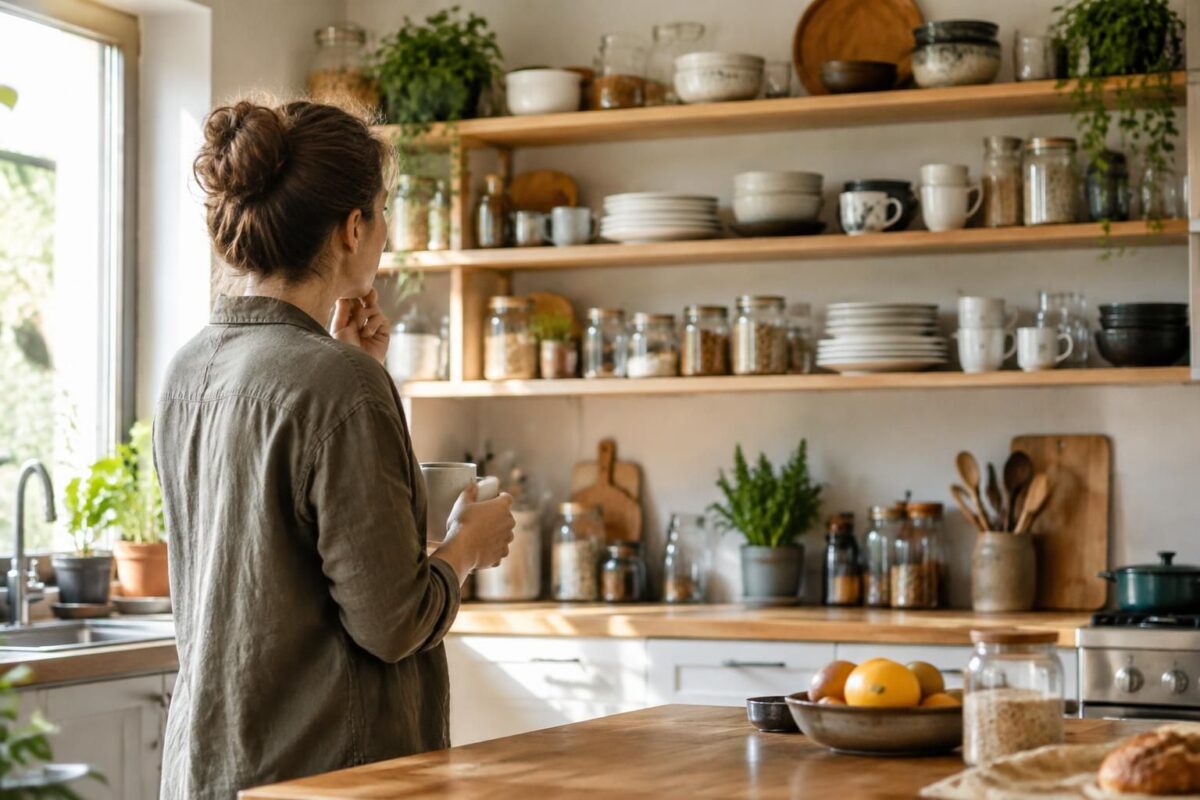
Imagine Léa, who installs open shelves in her kitchen to keep her favorite dishes close at hand. When she also displays packaging, small appliances, and mismatched mugs, the whole setup feels overwhelming; by limiting the items on display and adding a few doors, she gets practical storage without losing access to the essentials.
Open or closed storage: choose based on the room
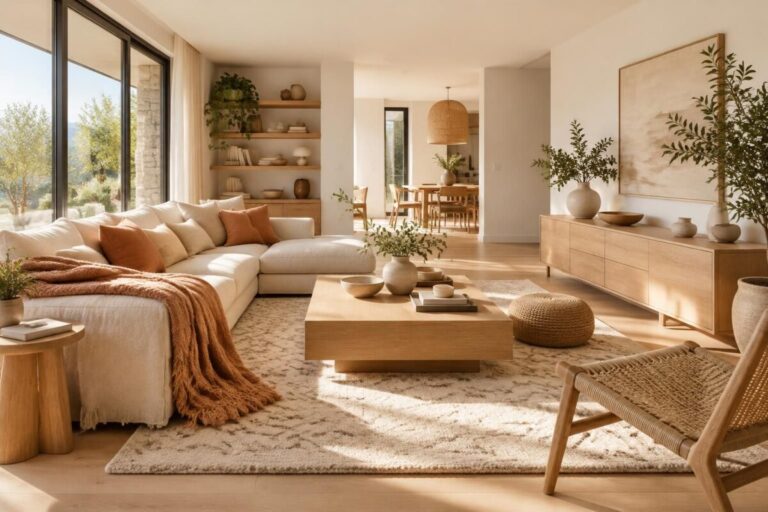
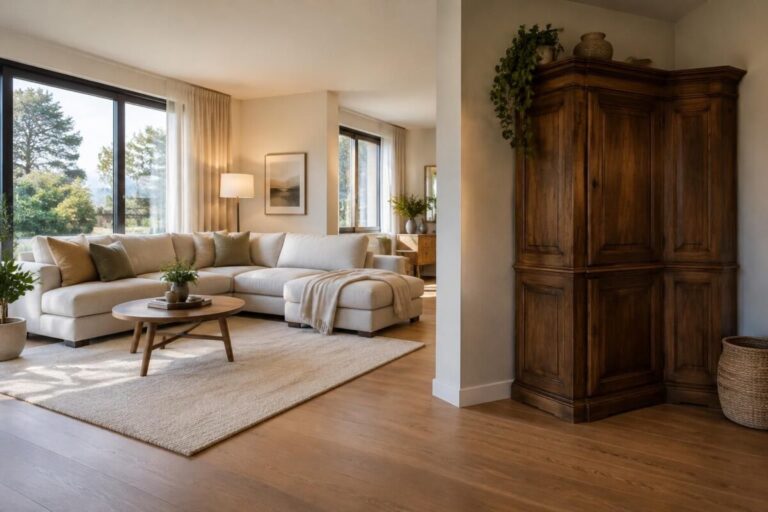
In a small kitchen, slim shelves can free up counter space, as long as you only put frequently used items on them. In a living room, partially closed storage at the bottom helps hide games, cables, and everyday papers.
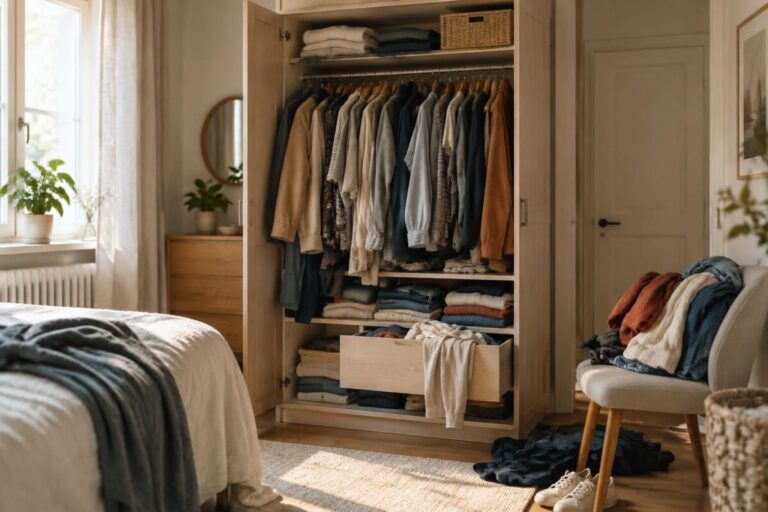
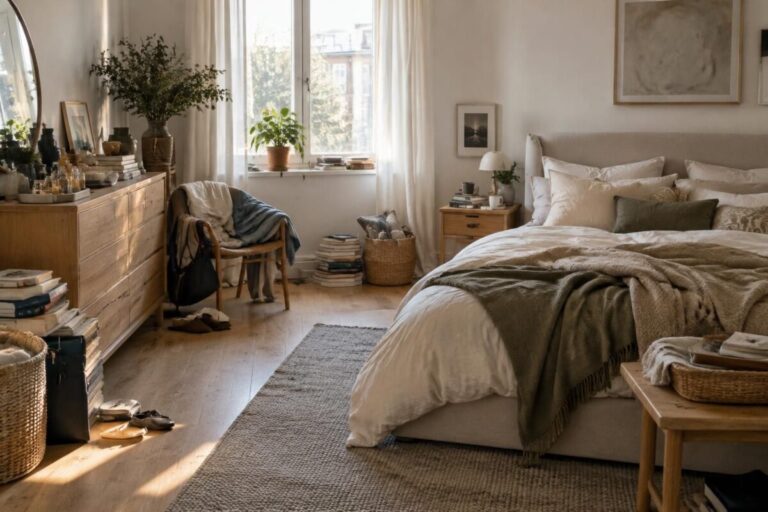
A bedroom sometimes calls for more discretion: a few books or carefully grouped accessories can stay on display, while linens and out-of-season clothes are best stored behind doors. The right balance depends mainly on your routines and how easy you want it to be to keep things tidy.
| Room | Leave on display | Conceal |
|---|---|---|
| Kitchen | Frequently used dishes, matching jars | Packaging, rarely used utensils |
| Living room | Books, a plant, a few selected objects | Cables, papers, gaming accessories |
| Bedroom | Current reads, a limited number of decorative items | Linens, out-of-season clothes, small accessories |
Organize open shelves without creating visual clutter
A well-arranged shelf doesn’t need to be full. Different materials—wood, metal, ceramic, or textiles—add texture, while empty spaces give the eye a break and prevent a cluttered look.
For a simple arrangement, place items in small groups of three to five, then vary their heights. A basket can hold chargers or small accessories: everything stays within reach, but the eye isn’t pulled in too many directions.
A three-step method for streamlining your storage
- Sort: remove anything that is neither useful day to day nor pleasant to look at.
- Arrange: group items by use or theme, varying their shapes and heights.
- Contain: add boxes or baskets for small items, then leave an open space on each piece of furniture.
This method makes home organization easier without imposing a rigid system. It also helps you make the most of your space: useful items stay visible, while surfaces don’t get overcrowded.
Reduce everyday stress with a balance of open and closed storage
Everyday stress doesn’t necessarily come from open storage itself, but from the number of items you have to manage and dust. If you have to put everything back in its place several times a day, your setup probably isn’t suited to the way you use it.
In an entryway, for example, a few hooks and an open catchall make everyday essentials easy to find. Doors or closed baskets can hold the rest, helping the space feel tidy as soon as you walk in.
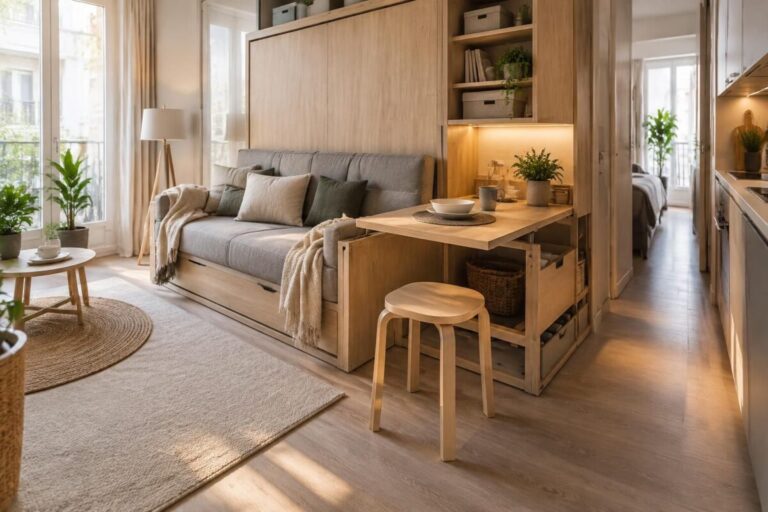
For storage that can adapt over time, modular combinations let you adjust the balance of open cubbies and closed compartments to suit your needs. It’s better to choose this flexibility to support an actual routine than to add shelves without deciding what will go on them.
Habits that help maintain a sense of calm
- Keep surfaces and some of your shelves clear.
- Choose containers in similar colors or materials to bring small items together.
- Keep everyday items within reach and put the rest behind a door.
- Do a quick sort when items start spilling out of their designated area.
The goal isn’t to have an untouched shelf, but a system that’s easy to maintain. When every item has a clear place, it’s easy to access what you need and the room feels more spacious.
Practical questions about open storage
Is open storage suitable for small rooms?
Yes, as long as the shelves are shallow and not overloaded. Alternating open cubbies with closed storage helps preserve a sense of space without putting everything on display.
How can I limit dust on open shelves?
Display items you use regularly, dust the surfaces as part of your usual cleaning routine, and put small accessories in boxes or baskets.
What should I display in open storage?
Choose useful or decorative items you truly enjoy: favorite dishes, books, plants suited to the light, or a few grouped keepsakes.
How can I reduce visual clutter in a living room?
Limit the number of items on display, group small accessories in containers, and combine open shelves with closed storage for less attractive items.
Thanks for reading! Feel free to share your thoughts in the comments. — Julie