Clever storage: this seemingly good idea takes up more space than it saves
Hello, this is Julie.
The seemingly good idea that backfires is adding boxes and furniture without checking whether they meet a specific need: they can clutter the space more than they help. To make room, it’s better to declutter first, then choose storage suited to the items and the room’s dimensions. A few guidelines are enough to prevent things from piling up and maintain a pleasant, organized interior.
Things to do now
- Measure the available space before buying a piece of furniture or a storage bin.
- Sort through the contents and remove anything you no longer use.
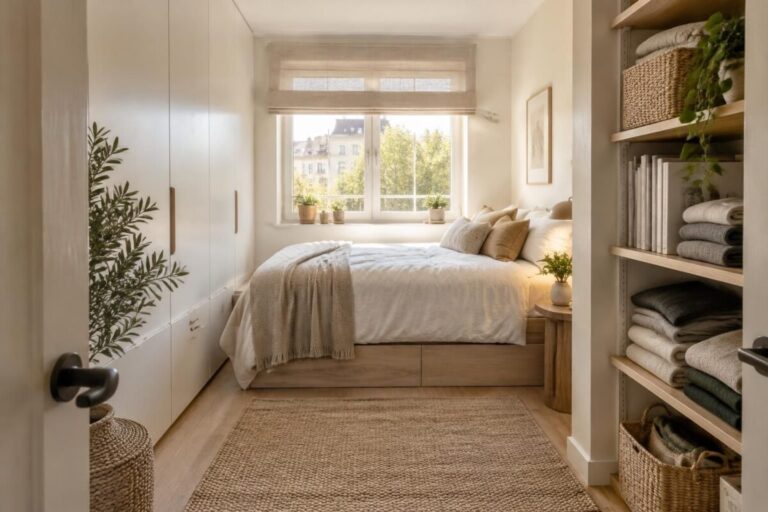
- Choose storage that makes use of an area that would otherwise go to waste, such as the space under the bed.
- Make sure doors, drawers, and walkways remain easy to use.
- Avoid buying a storage solution before identifying what it needs to hold.
An extra shelf may seem practical, but if it draws the eye and narrows the walkway, it could throw the room off balance. To spot this problem in the living room, check out these tips on poorly placed storage that makes a living room feel cluttered and these ideas for storage that keeps a living room tidy without weighing it down.
The trap of storage that takes up too much space
Storage is only useful if it makes belongings easy to access without getting in the way. When a basket sits empty, a piece of furniture blocks a door, or items pile up on top of cupboards, the chosen solution creates a new problem.
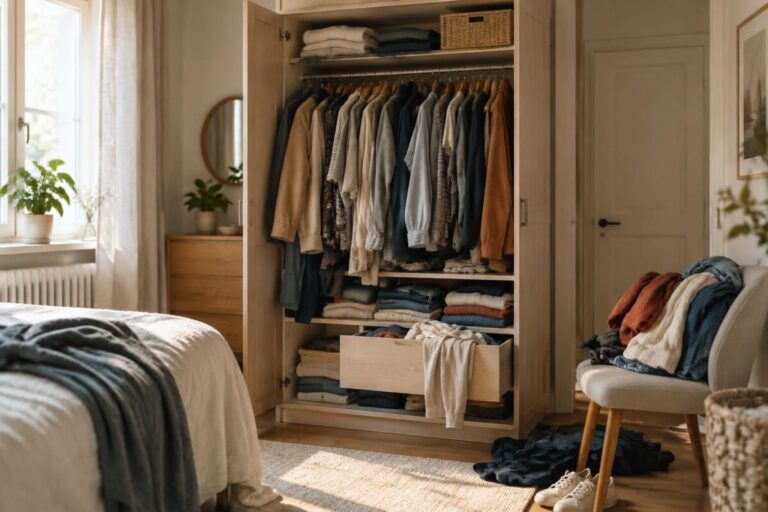
Imagine Léa, who adds several bins to a small bedroom to organize her clothes. Because they’re too deep, she has to move the ones at the front to reach the others: the storage looks tidy, but every search takes longer. Effective storage keeps items accessible and prevents it from hiding clutter.
The false promise of box after box
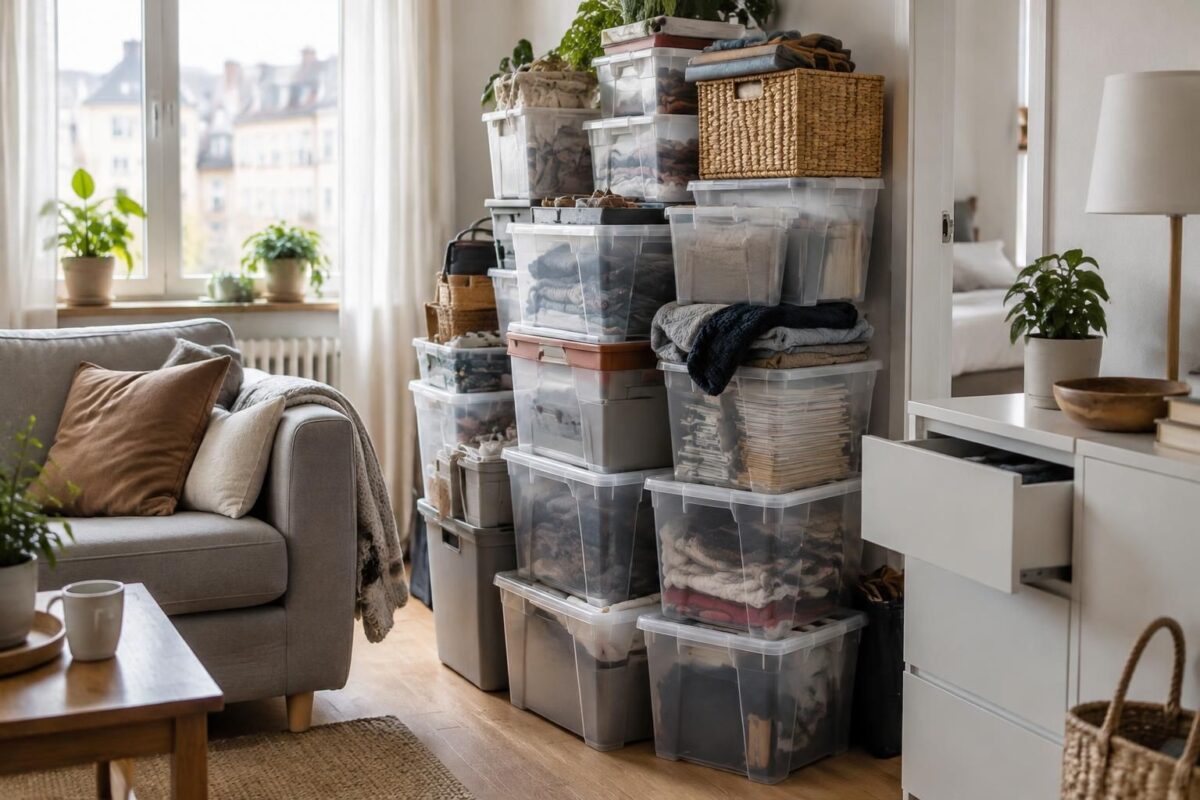
Boxes are useful for grouping similar items, but buying them without decluttering often just moves the problem elsewhere. Belongings disappear from view, then pile up in containers that are hard to identify or reach.
Before adding more, check what’s inside and how often you use it. Everyday items should stay within easy reach; things you rarely use can go higher up or under a bed, as long as you can retrieve them easily.
When wall storage makes a room feel cluttered
Shelves make use of vertical space, but a wall covered in items can make a room feel cluttered. In a small room, leave part of the wall clear and limit shelves to things you really use or enjoy.
In a kitchen, a few neatly arranged jars can free up counter space. On the other hand, adding more hanging accessories and open shelves means more cleaning and makes even the slightest mess highly visible. Saving space should also preserve a sense of visual calm.
Choosing storage solutions that suit each space
Making the most of your space starts with noticing unused areas, not buying a trendy accessory. The space under a staircase, a recessed nook, or the area under a bed can hold belongings without reducing the room available for walking, as long as the dimensions and intended use are suitable.
| Area | Possible solution | What to check |
|---|---|---|
| Under the bed | Shallow baskets or drawers on wheels | Available height and access for cleaning |
| Under the stairs | Shelves, a cupboard, or a storage bench | The depth and shape of the space |
| Behind a door | Lightweight hanging organizer | The door must open without hitting the items |
| Wall niche | Fitted shelves or a small closet | How secure the fixings are and how easy it is to reach |
These ideas aren’t one-size-fits-all solutions: an under-bed basket works for comforters or seasonal clothes, but not for things you use several times a day. In a narrow entryway, a deep storage unit can obstruct the walkway, so it’s best to measure before deciding.
A simple three-step process
- Define what you need. Choose one area and gather the items that belong there. Sort through them, and donate or recycle anything you no longer use.
- Measure and test. Note the available width, depth, and height. Mark out the space with masking tape on the floor or use a piece of cardboard to check that you can still move around easily.
- Set it up, then adjust. Choose a storage solution that’s the right size and observe how you use it for a few days. If it makes things harder to reach or attracts too many items, reduce what’s in it or move it.
This method prevents you from confusing capacity with usefulness. A small, well-thought-out solution often improves your interior layout more than a large piece of furniture bought in a rush.
Smart storage without the clutter
Shelves in a niche, under-bed storage, and baskets built into a bench can free up space, as long as they don’t become unlimited storage areas. Set a clear capacity: if the container overflows, it’s a sign that it’s time to sort through things again.
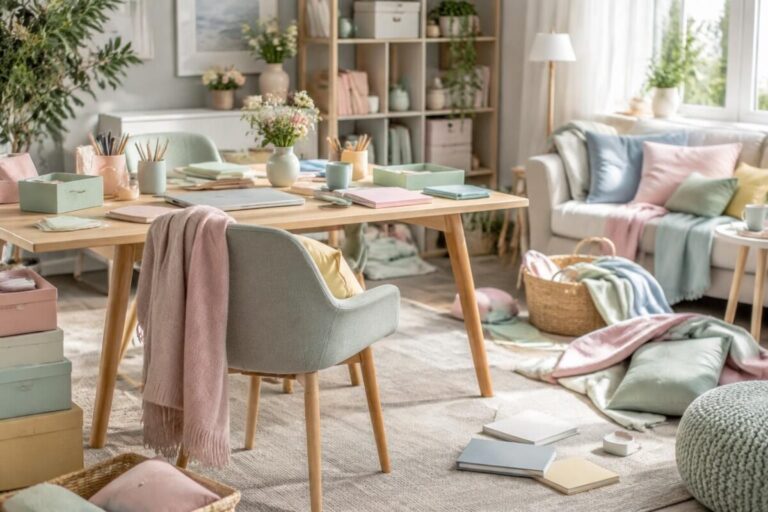
For items on display, choose a coordinated color palette and leave surfaces clear. Decluttering doesn’t mean emptying the room; it means making space for what you use and what makes everyday life more enjoyable. The best storage is the kind that fades into the background when you use it, not the kind that adds another piece of furniture.
How can I tell if storage will clutter a room?
Measure the space and make sure the storage won’t block a walkway, a door, or access to your belongings. If it restricts movement or creates a surface where clutter can build up, it’s probably not suitable.
Are storage boxes a bad idea?
No. They’re useful for grouping similar items, but they become counterproductive if they’re used to avoid decluttering or if it’s hard to find what’s inside.
Which areas can I use to save space?
Look under the bed, under the stairs, in niches, and behind doors. Choose these areas based on what you need to store, and make sure everything remains easy to access.
Should I choose closed or open storage?
Closed storage hides items and creates a calmer overall look, while open shelves keep belongings visible and accessible. A mix of both often works well, depending on how you’ll use them and the effect you want.
Thanks for reading! Feel free to share your thoughts in the comments. — Julie