Fine furniture: practical enough or ultimately too limited?
Hello, Julie here.
Slim furniture is practical in small spaces if its dimensions suit your needs and you make up for its small footprint with thoughtful storage.
Its silhouette makes a room feel lighter, but a model that is too narrow or fragile can quickly become limiting. To find the right balance, compare the space you save with the comfort it actually offers.
What to do now
- Measure the available width and depth before choosing.
- Make a note of what the furniture needs to hold every day.
- Check its stability, maximum load capacity, and the quality of its fasteners.
- Leave a comfortable amount of space to walk around the furniture.
- Plan storage solutions to keep surfaces from becoming cluttered.
Slim furniture can open up a walkway without sacrificing functionality, provided you choose a model suited to the room. For more details, check out these tips on slim furniture for narrow interiors and the criteria that help you assess whether a slim piece of furniture is stable enough.
Slim or compact furniture: which works best for everyday use?
The two categories do not meet exactly the same needs. A slim piece of furniture is often shallow, while a compact piece is also narrower or shorter: the former makes it easier to move around, while the latter packs more functions into a small footprint.
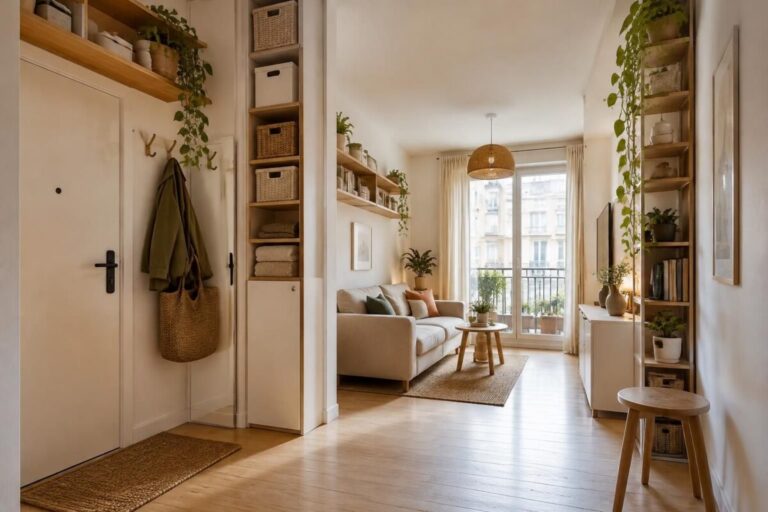
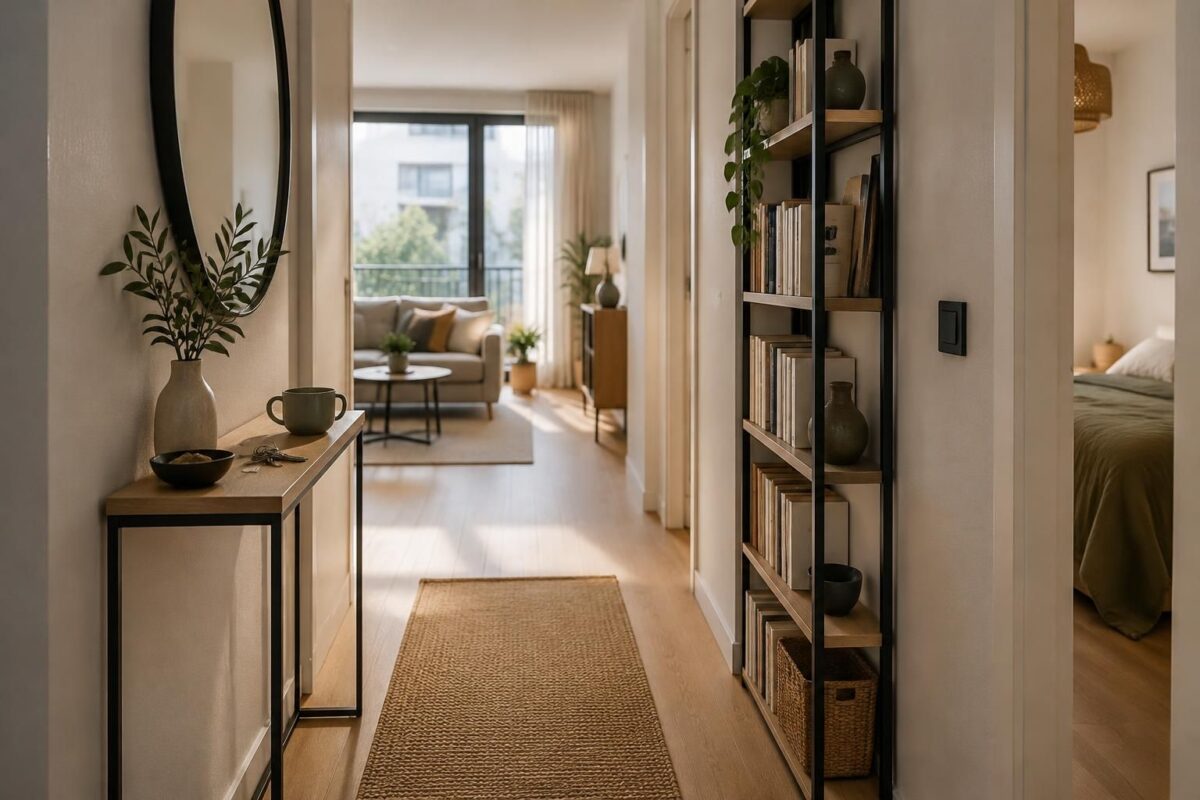
In a narrow entryway, a shallow console can hold keys without blocking the walkway. In a living room, however, a very slim TV stand may not have enough room for devices and accessories. The space saving is real only if the furniture serves a specific purpose.
| Type of furniture | Main advantage | Limitation to check |
|---|---|---|
| Shallow console | Keeps an entryway or hallway clear | Limited surface for setting down several items |
| Slim shelving unit | Takes up little floor space and holds books or lightweight items | Capacity and stability depend on the mounting |
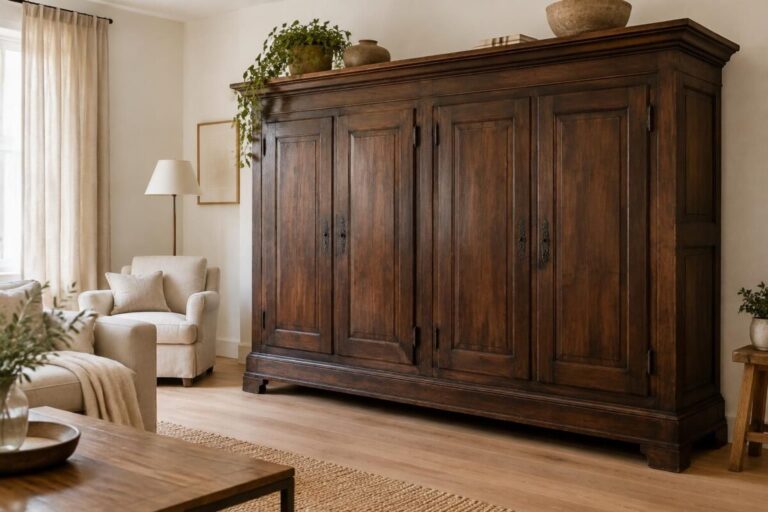
| Compact cabinet with drawers | Combines efficient storage with a small footprint | Can look bulky if it has a solid, heavy-looking front |
| Sofa with slim legs | Lets you see the floor and makes the room look lighter | Comfort depends on the seat, not on how slim the legs are |
So the best measure is not just appearance: it is whether the furniture can do its job without creating a new obstacle.
When does slim furniture become too limiting?
The trap is choosing a model just because it looks unobtrusive. A small chest of drawers, for example, may not be deep enough for folded clothes; a desk that is too narrow makes working uncomfortable if you need to fit a computer, notes, and a lamp on it at the same time.
Limited functionality becomes especially apparent when the furniture needs to hold bulky items or withstand frequent use. Before buying, measure what you plan to store in it: a few centimeters can determine whether the doors close properly or your belongings spill out.
Signs that a model is too narrow
- Useful items stick out or are constantly left on top.
- The drawers are too shallow for what you plan to put in them.
- The furniture wobbles when you use it or requires excessive care.
- Its small footprint means you have to add several extra pieces of furniture.
In a studio apartment, for example, a slim shelving unit may work for paperbacks and decorative objects. If it also needs to hold baskets, files, and everyday supplies, a slightly deeper model will often be more practical.
How to save space without sacrificing comfort
A lightweight silhouette helps open up a room, but other details matter too. Exposed legs let light flow beneath the furniture, rounded shapes reduce awkward corners, and light colors help create a more open feel.
However, avoid filling the room with lots of miniature furniture. Several scattered pieces can clutter the view and make storage more complicated. A larger, well-proportioned piece in the right place can give the room structure more simply.
A simple three-step method
- Define how you’ll use it. List what the furniture needs to hold or allow you to do: sit, work, store things, or set down a few items.
- Measure the space and the furniture. Check the depth, width, door clearance, and the space needed to walk around it.
- Check the balance. Picture the furniture in place and make sure it fits without requiring extra pieces or making everyday tasks more difficult.
In a small living room, a round table with a central pedestal and a sofa with slim legs can improve circulation while keeping the seating comfortable. Minimalist design works when it serves a purpose, not when it forces you to give up what you need.
Frequently asked questions about slim furniture
Is slim furniture suitable for every small room?
It is useful when clear walkways are a priority, but every room has its own needs. Check the storage capacity and comfort before choosing.
Is slim furniture necessarily fragile?
No. Strength depends on the materials, design, joinery, and fasteners. Check the model’s maximum load capacity and stability.
How can you avoid insufficient storage?
Assess how much you need to store before buying and choose efficient storage, such as drawers or suitable wall-mounted units.
Do light-colored furnishings make a room look bigger?
Light colors and reflective finishes can boost brightness and make a room feel less cluttered, without changing its actual floor area.
Thanks for reading! Feel free to share your thoughts in the comments. — Julie