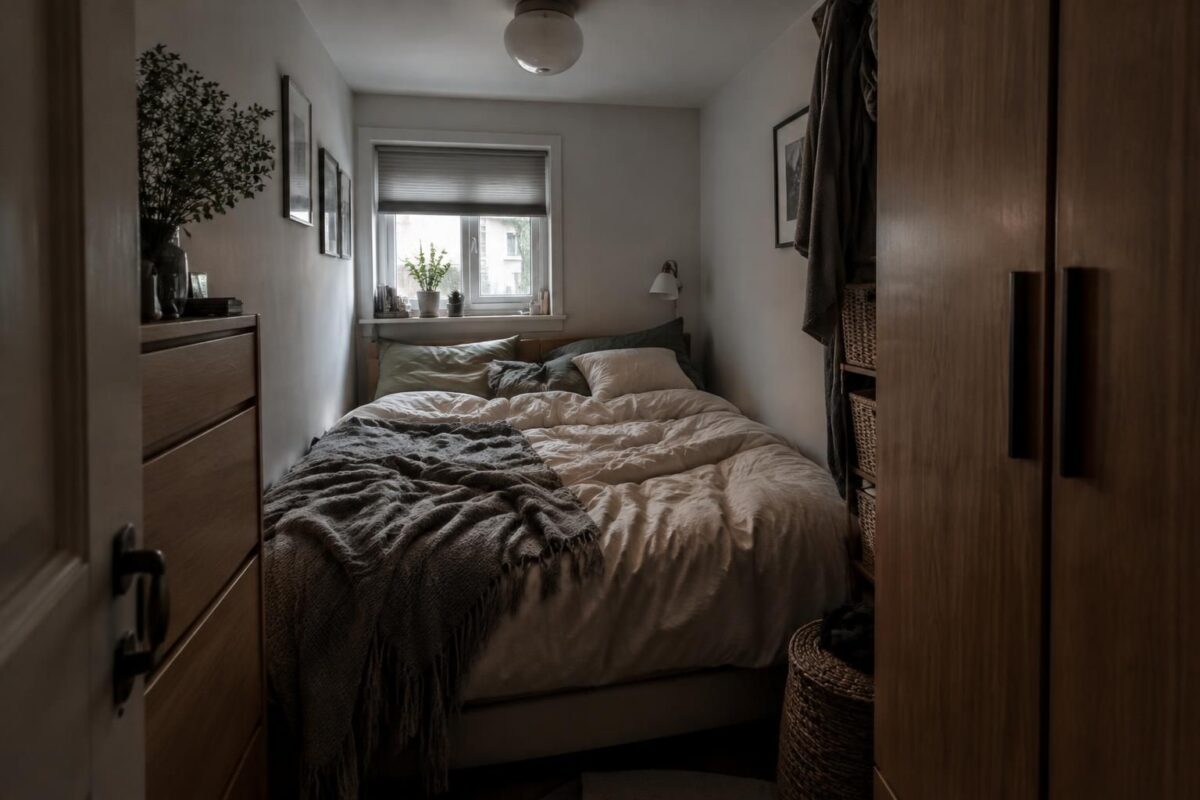
Small Bedroom Atmosphere: Why It Still Feels Oppressive
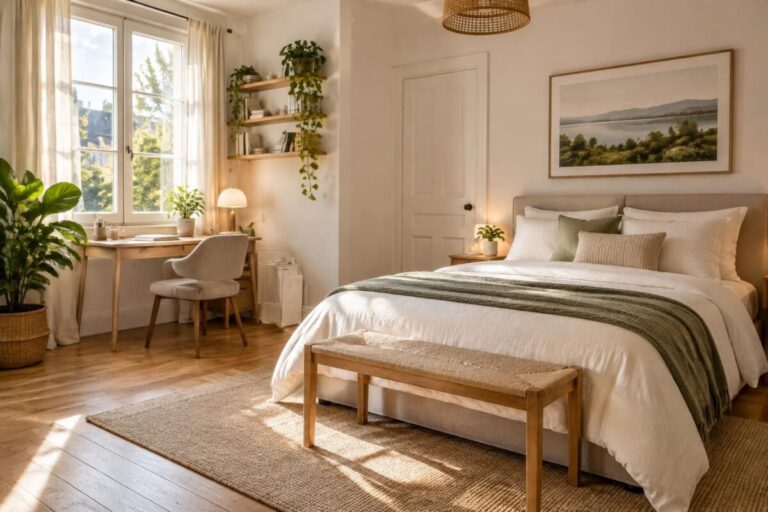
Hi, it’s Julie. A small bedroom feels less cramped when you clear the pathways, choose furniture that fits, and let in more light. A few targeted adjustments can transform the room without moving the walls.
The problem often comes from several details that add up: clutter, insufficient lighting, or oversized furniture. Here are the first steps to make your bedroom brighter and more pleasant.
What to do now
- Clear the space around the bed and keep a clear path to the door.
- Remove anything from the room that you don’t use every week.
- Choose soft general lighting and add a lamp beside the bed.
- Lighten up the windows: sheer curtains let in more light.
- Check that the bed and storage furniture are suited to the size of the room.
A restful bedroom isn’t just about its size: good interior design can make a difference to the light, proportions, and movement around the room. To choose your colors, also check out these tips on dark colors in a small room and the pitfalls of an overly uniform taupe color scheme.
Why a small bedroom can feel even more cramped
A room can be small without feeling cramped. That feeling usually arises when several obstacles catch the eye or make everyday activities more difficult.
Disproportionately large furniture, for example, can hide much of the floor. If a bed takes up almost the entire width of the room, it becomes difficult to move around and the space immediately feels more cramped.
Details that make the lack of space more noticeable
Dark colors don’t always have to be avoided, but when used on several large surfaces, they absorb some of the light. Combined with insufficient lighting, they make the room feel even smaller.
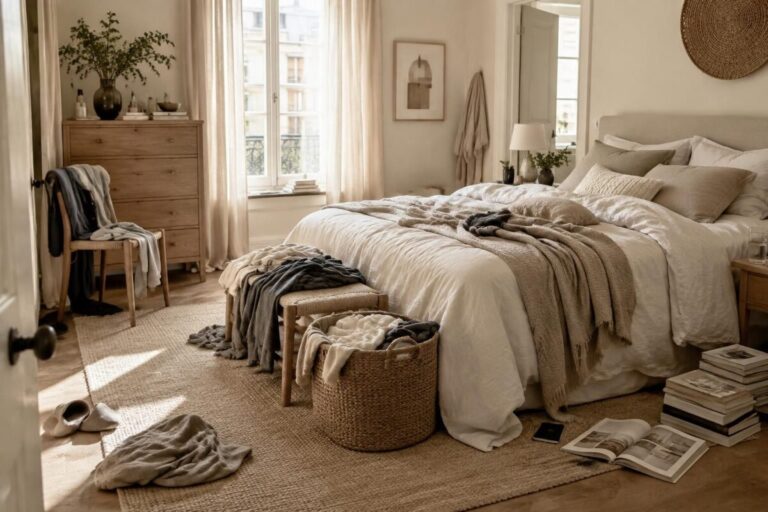
Clutter also plays a visual role. A chair turned into a clothes rack or items piled on a dresser create bulky shapes that break up the room.
Finally, limited ventilation can make the room feel less comfortable. Airing it out regularly and keeping air vents clear helps make the bedroom more pleasant, even if it doesn’t change its dimensions.
| What’s causing the problem | Effect in the bedroom | First adjustment |
|---|---|---|
| Oversized furniture | Narrow pathways and little visible floor space | Replace a bulky piece with a more compact one |
| Insufficient lighting | Dark corners and a reduced sense of depth | Add a light source near the areas where you need it |
| Accumulated belongings | The eye is drawn in several directions | Clear surfaces and put everyday items away |
| Heavy curtains | The window looks smaller | Choose a lightweight fabric and a wider curtain rod |
The common trap: filling every corner
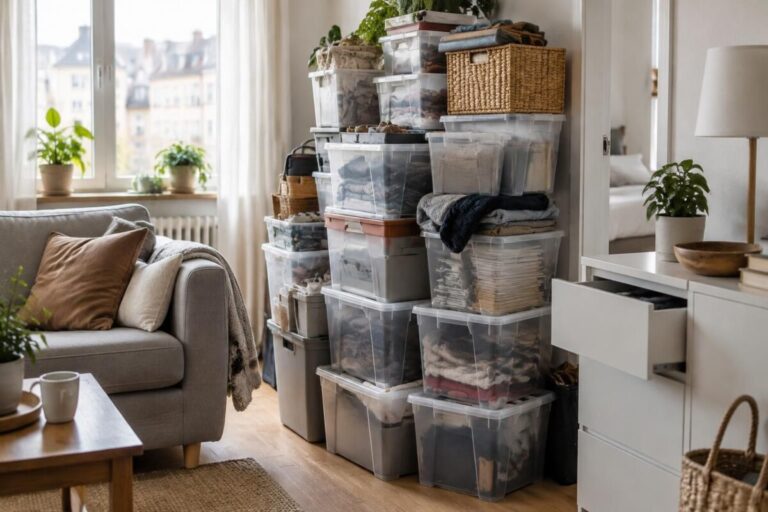
When storage is lacking, adding more furniture seems logical. Yet a wardrobe, a shelf, and boxes on the floor can narrow the pathways and make the whole room feel more cluttered.
Imagine Léa, who is furnishing a narrow bedroom with a large dresser at the foot of the bed. By moving rarely used clothes into closed storage elsewhere, she can replace the dresser with a shallower model and clear the path to the window.
A good rule of thumb: every piece of furniture should serve a specific purpose and allow for easy movement. More visible floor space often makes a room feel noticeably bigger.
Three steps to create a lighter feel
- Identify the bottlenecks. Look at the paths between the door, the bed, and the window. If you have to go around a piece of furniture, move it or reduce what’s in it.
- Rebalance the light and colors. Clear the windows, add a lamp, and reserve richer colors for one wall or a few accessories.
- Reduce the amount of visible furniture. Keep essential storage, opt for simple lines, and clear surfaces. A small bedroom feels calmer when everything has its place.
A simple example: if the room is dark, start by lightening the curtains and moving a lamp before repainting. If the pathway is narrow, measure the piece of furniture blocking it before buying another one.
How to choose solutions that suit your bedroom
The best option depends on the main cause. A room with little natural light needs a different approach from a cluttered bedroom, and a light color palette won’t make up for oversized furniture.
Start by changing just one thing, then observe the effect for a few days. This approach avoids unnecessary purchases and helps you identify what really improves comfort.
What colors should I choose for a small bedroom?
Light, soft shades reflect light better, but you can still use a dark color on one wall or in small accents. The balance with the lighting and other surfaces matters more than any absolute rule.
How can I make a room feel bigger without changing the furniture?
Clear the pathways, free up surfaces, and let in natural light. Lightweight curtains and neatly arranged storage can already make the room feel less cluttered.
Can a large mirror help in a small bedroom?
Yes, if placed opposite a light source or near a window, it can reflect light and make the space feel more open. However, avoid placing it where it will mostly reflect clutter.
How can I improve a bedroom that feels stuffy?
Air it out regularly, keep air vents clear, and avoid placing furniture in front of openings. If the air remains humid or stuffy, check that the ventilation is working properly.
Thanks for reading! Feel free to share your thoughts in the comments. — Julie