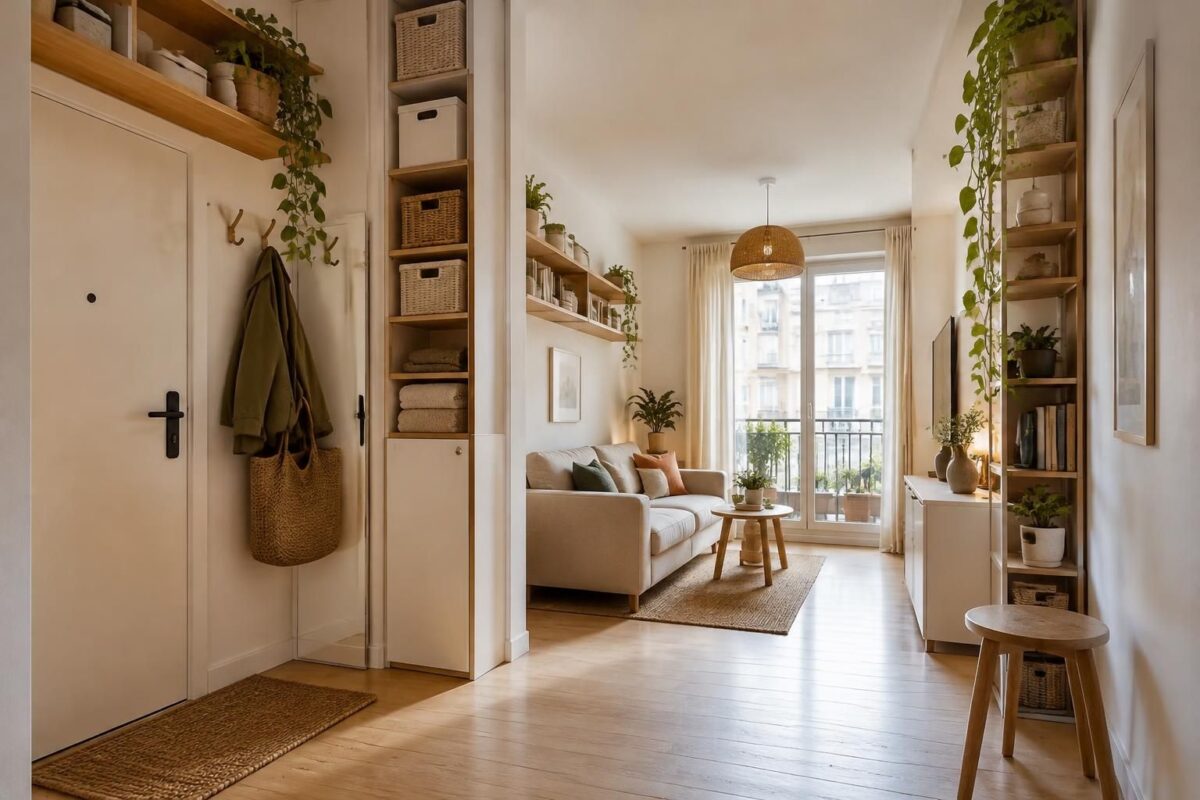
Vertical storage: the right choice when floor space is limited
Hello, this is Julie.
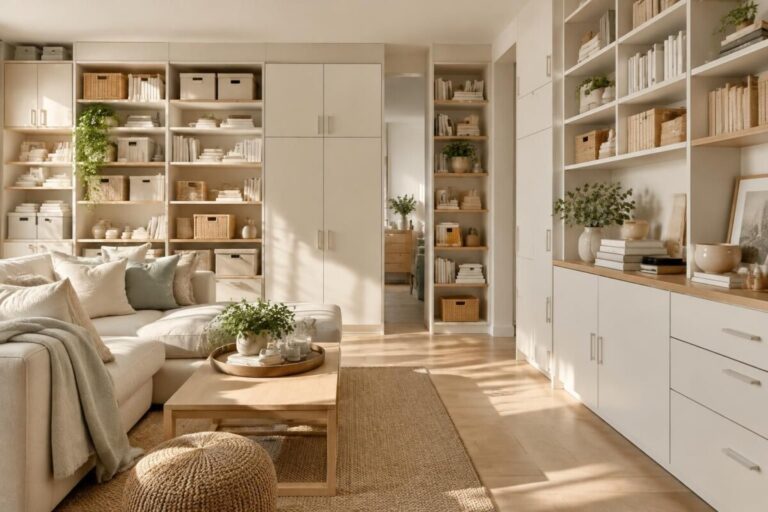
When floor space is limited, vertical storage helps you make the most of your space by using the walls and height.
A few compact solutions are often enough to clear the way and make a room more pleasant. The key is to keep useful items within reach and avoid turning the walls into cluttered storage areas.
Things to do right away
- Identify an available wall or an unused area above a door.
- Sort through your belongings before adding furniture or boxes.
- Keep the things you use every day at hand height.
- Reserve the highest shelves for seasonal items.
- Check the type of wall and the fixings before installing anything heavy.
For more ideas suited to small rooms, take a look at these vertical wall storage solutions and these tips for avoiding an overcrowded wall.
Vertical storage or floor-standing furniture: which should you choose?
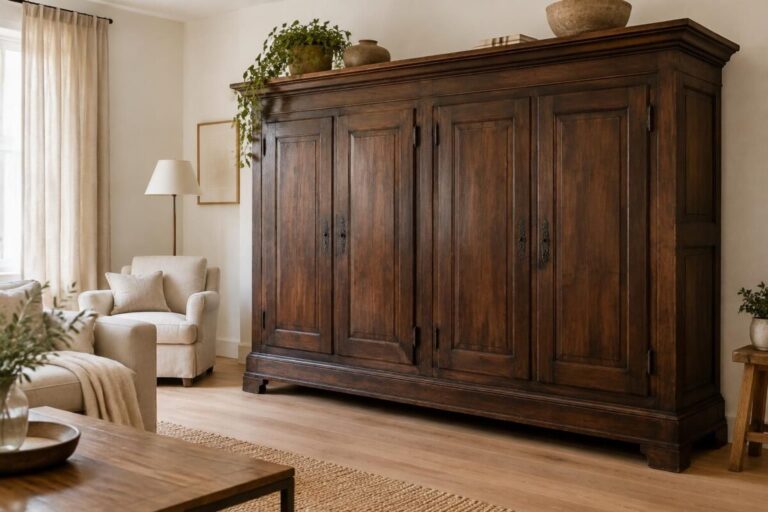
Floor-standing furniture often offers enclosed storage, which is useful for hiding belongings, but it reduces the available floor space. Wall shelves and wall-mounted storage, on the other hand, free up floor space, as long as you keep the arrangement light.
For example, in a narrow entryway, a coat rack with a few storage hooks and a small shelf for everyday essentials can replace a deep console table. Shoes can be stored in a tall, slim cabinet rather than left scattered on the floor.
| Solution | Useful for | Things to watch out for |
|---|---|---|
| Wall shelves | Books, jars, and decorative items | Weight and the quality of the fixings |
| Tall cabinets | Storing a lot without taking up more floor space | Keep heavy items within easy reach |
| Pegboard or perforated panel | Utensils, supplies, and accessories | Avoid displaying too many small items |
| Hanging storage | Freeing up floor space and making cleaning easier | Check that the wall is sturdy |
The right choice depends on how you’ll use it: opt for open storage for everyday items and closed containers to reduce visual clutter.
Vertical storage solutions for every room
In the bedroom and dressing room
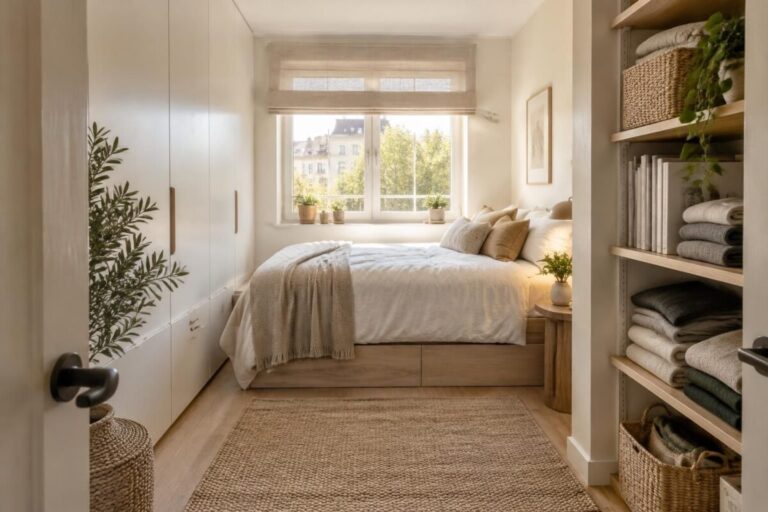
Folding clothes vertically in drawers makes T-shirts and sweaters visible at a glance. Multiple hangers can also keep pants or scarves together, while stackable boxes hold out-of-season accessories.
An open wardrobe makes use of the room’s height without taking up space with a large closet. If the clothes make the room look untidy, a curtain can hide them while keeping them easy to access.
In the kitchen and bathroom
A rail mounted on the backsplash can hold utensils and mugs, while shallow wall shelves keep jars or everyday products within reach. In the bathroom, hooks and vertical bars free up the edges of the sink and replace bulky towel racks.
A plate rack lets you take out one plate without lifting an entire stack. This small change makes everyday tasks smoother and keeps the countertop clear.
In the entryway and office
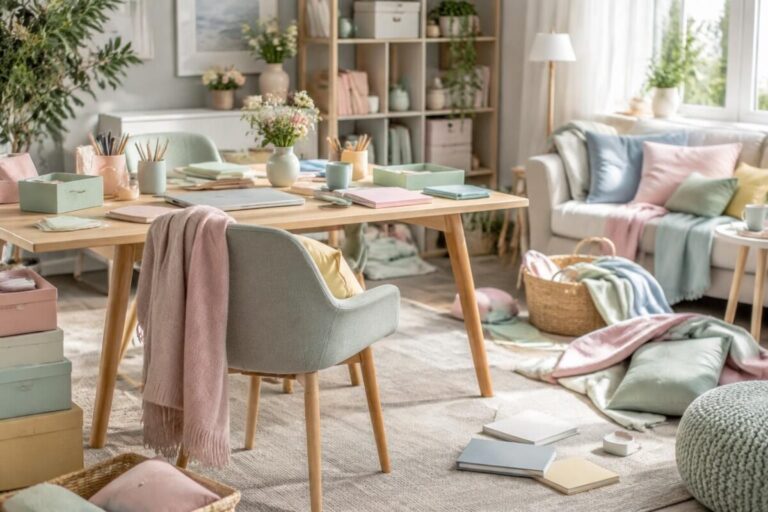
In the entryway, a wall-mounted coat rack, a wall-mounted catchall, and a slim shoe cabinet clear the passageway. In the office, vertical file holders, wall organizers, and a shelf above the desk are an effective alternative to piles of paperwork.
This interior organization makes it easier to find your belongings quickly and keeps the work surface clear. The principle is simple: every item should have a clearly defined place that suits how often you use it.
Install storage without making the room feel crowded
A wall covered from top to bottom can feel oppressive, especially in a small room. Alternate filled areas with open spaces, choose shallow storage, and, if possible, pick colors close to the wall color for a more subtle look.
Before mounting a shelf, check the wall and choose suitable anchors. Keep heavy items low down or within easy reach; lighter, rarely used items can go higher up.
A simple three-step method
- Sort: remove items you don’t need and group together the ones you use for the same purpose.
- Organize: choose a vertical storage area and arrange items according to how often you use them.
- Adjust: try the setup for a few days, then move anything that gets in the way or is hard to reach.
Start with a single drawer, a section of wall, or a closet to see how much space you can save. Once that area is working well, you can apply the same approach elsewhere.
Frequently asked questions about vertical storage
How can I save space without drilling into the walls?
Choose a storage ladder, a narrow freestanding shelf, or a tension rod suited to the room. Always check that it is stable and follow the stated maximum load.
What should I store on the highest shelves?
Use them for lightweight items you rarely need, such as seasonal linens or decorations. Use easy-to-identify boxes and keep heavy items within easy reach.
How can I keep wall storage from looking cluttered?
Limit the number of items on display, choose matching containers, and leave open spaces between storage areas. An airy arrangement looks lighter.
Is vertical storage suitable for every room?
Yes, as long as the supports are suited to the room and the items being stored. In a bathroom, choose materials that resist moisture; in an entryway, make sure the storage does not block the way.
Thanks for reading! Feel free to share your thoughts in the comments. — Julie