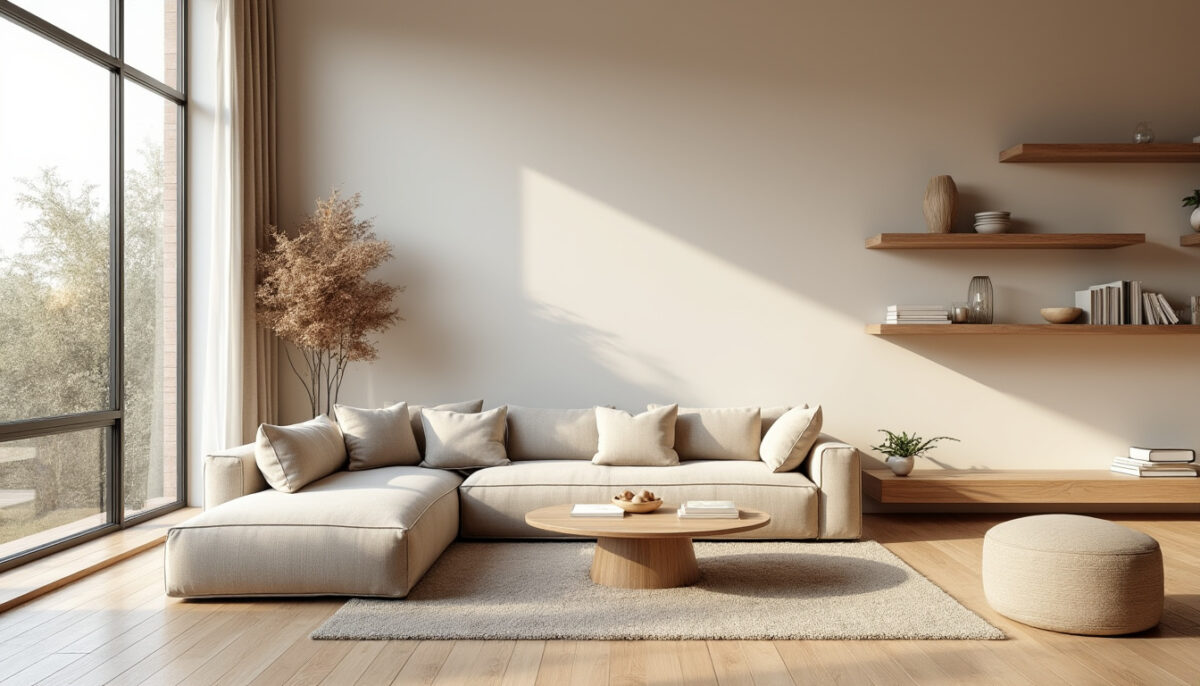
Beige and wood: a safe combo or already overdone?
Hello, Julie here.
To create a successful beige and wood living room, start with a light base, choose one dominant wood tone, and add contrast with a few textiles or accessories. Timeless, these neutral colors form the basis of a warm, soothing atmosphere, ideal for a trendy interior that combines simplicity and comfort.
What to prioritize:
- Vary shades of beige to avoid an overly uniform look.
- Introduce a range of textures: linen, wool, raw wood, cane.
- Add complementary color accents, such as terracotta or sage green.
- Use multiple sources of warm lighting to highlight the natural wood.
- Choose furniture with a sleek design for a modern Scandinavian style.
To get this decor combination right, you need to master the beige and natural wood color palette, especially if you want to avoid making the whole space look bland or dated. The key lies in contrast and layering different materials. If it’s a Scandinavian-style living room with plenty of natural light, consider adding wool cushions or a jute rug. If it’s a cozy bedroom, introduce softer textiles and play with warmer shades of beige. You can find more specific ideas in these articles on 20 decor ideas for a beige and wood living room, and in this detailed guide to beige and wood living room decor.
The importance of contrast and textures in beige and wood decor
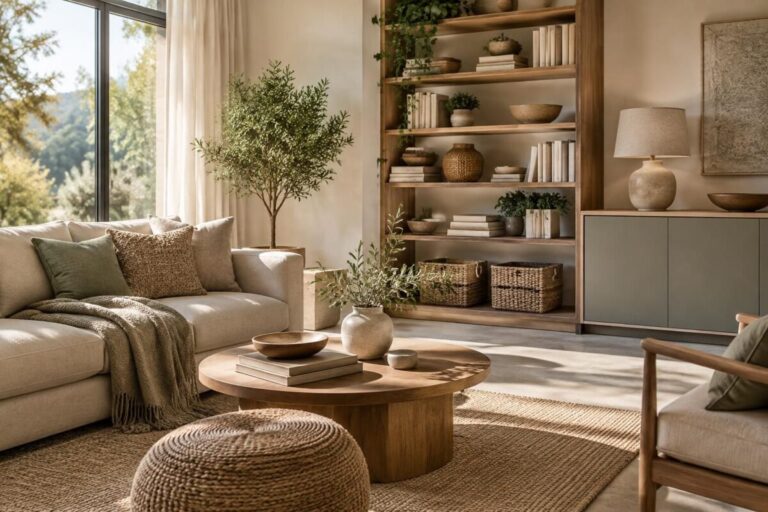
Beige is often seen as too neutral, sometimes even bland, especially when paired with light wood that looks too uniform. This can make a room feel monochromatic and flat. When working with beige, play with different textures: a bouclé throw, a jute rug, a rattan armchair, or washed linen curtains. If the wood is too light throughout, it can flatten the decor, while wood with varied finishes—honey, walnut, natural oak—adds visual depth.
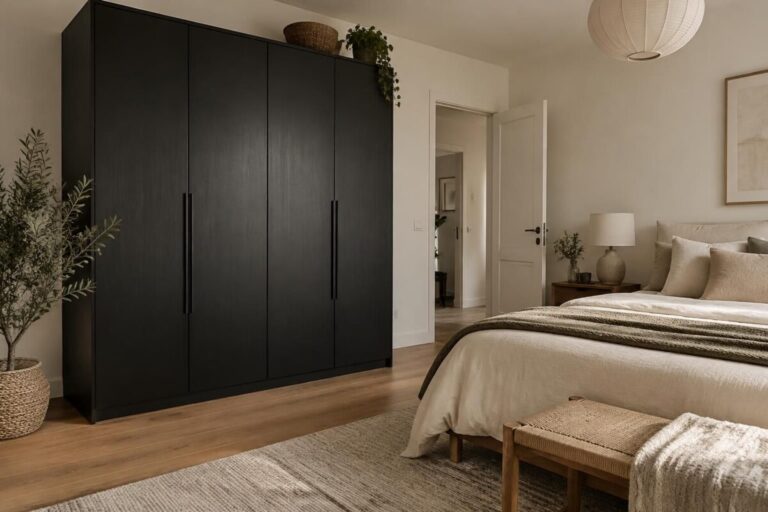
A little story: in a bedroom decorated exclusively with very pale beige tones and uniform light wood, the atmosphere felt almost clinical. Adding a terracotta throw and a small lamp with a charcoal-colored base changed everything: the room became a warm, stylish cocoon—a reminder that a small contrasting detail is often just the finishing touch you need.
3 steps to bring your beige and wood decor to life:
- Step 1: Choose a varied range of beige shades: sand, cream, and warm beige.
- Step 2: Choose one dominant wood tone, then add a second as an accent instead of mixing too many wood species.
- Step 3: Add colorful accents—sage green, terracotta, charcoal—to accessories and textiles.
Neutral color palettes for a warm, lively atmosphere
The beige and wood color palette becomes much more interesting when you add complementary colors. For example:
| Palette | Atmosphere | Decor tips |
|---|---|---|
| Sand beige + light wood + soft charcoal | Modern and structured | Keep the contrast to a few accessories; add a frame or a small dark piece of furniture. |
| Warm beige + honey wood + terracotta | Warm and enveloping | Add terracotta cushions, vases, or lamps sparingly to liven things up. |
| Grayish beige + light wood + sage green | Fresh and soothing | Use this combination in bright rooms, with textiles in light shades of green. |
To get these shades just right, feel free to explore different sources and variations in home decor. Beige and wood interior decor offers a wealth of options for fine-tuning the atmosphere you want. The good news is that this decor combination will stand the test of trends, as long as you’re willing to refresh the textures and shades.
Beige and dark wood living room: how do you keep it bright?
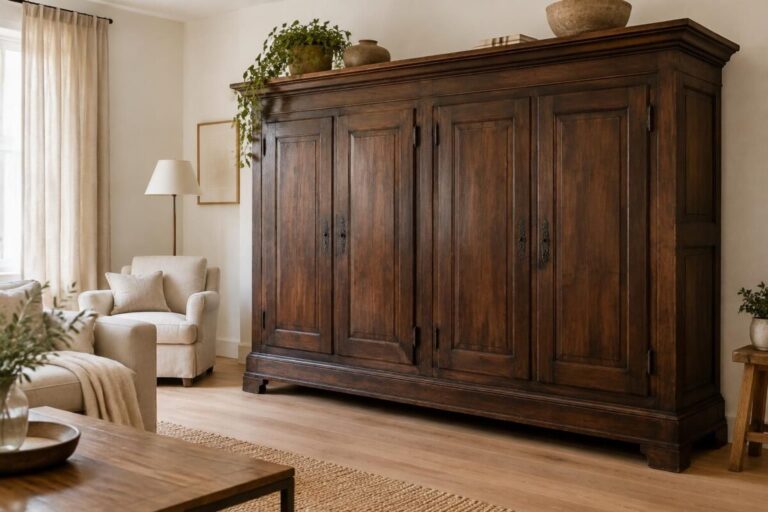
If you already have a walnut table or a dark sideboard, let it serve as an anchor and lighten the elements around it: a light beige wall, an off-white rug, and sheer curtains, depending on how much privacy you need. Avoid adding all your large furniture in the same dark shade if the living room gets little daylight. A small dark accent on a frame or lamp base is enough to tie everything together.
Example to adapt: grayish beige sofa, walnut table, and sage green cushions for soft contrast; cream sofa, honey oak, and a terracotta accent for a warmer palette. Place a beige swatch near the floor and the furniture, then look at it in the morning and evening. Dulux Valentine explains how light changes colors: the name “beige” doesn’t guarantee the same undertone.
To carry this palette through the rest of the room, DecoStyleArena’s ideas for colors and materials for the home can help you coordinate textiles, storage, and small decorative objects without matching everything.
Combining sleek design with natural inspiration
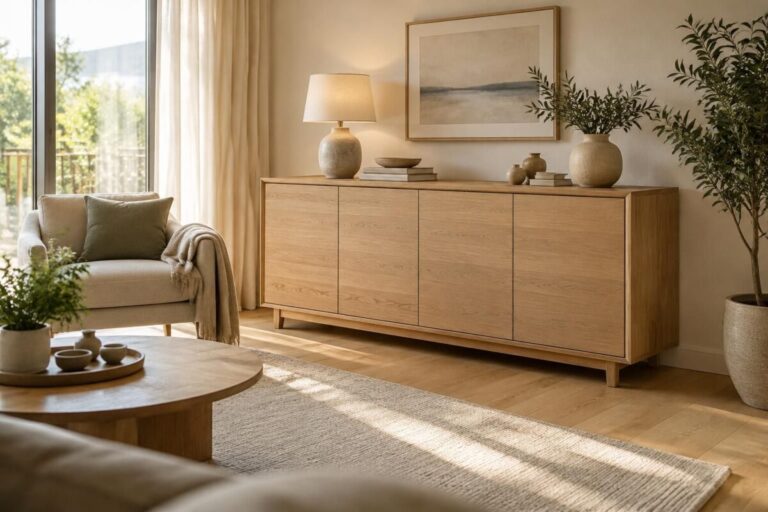
Scandinavian style champions sleek design, functionality, and light. Pairing natural wood with beige creates a relaxing atmosphere. Wool cushions, low-pile rugs, and furniture with simple lines can often give this classic combination an elegant update. This style has become a staple of the beige and wood decor combination, partly thanks to its ability to create a cocoon that feels both modern and warm.
Leave a few surfaces clear so the wood grain and textures remain visible. You don’t need to buy lots of accessories to give this duo character.
FAQ: Beige and wood in your decor—what should you know?
Why can beige and wood make a room look too uniform?
Because shades that are too similar blend together visually, you need to vary tones and textures to create depth.
What colors can you add to beige and wood to avoid a monotonous look?
Terracotta, sage green, or charcoal brown add contrast without making the room feel harsh.
How can you light a beige and wood room to create a cozy atmosphere?
Use several sources of soft lighting, such as lamps with fabric shades, to avoid light that feels too cold.
Can you use dark wood with beige?
Absolutely, dark wood creates rich contrast that enhances the warmth and depth of a beige room.
Does Scandinavian style work with the beige and wood combination?
Yes, it’s a perfect match thanks to the sleek design and warm atmosphere they create together.
Thanks for reading; Julie. P.S.; Leave a comment, and I’ll reply personally!