Cosy atmosphere: why too many baskets clutter the space
Hello, it’s Julie. Too many decorative baskets add too much volume and too many textures: limit them to a few carefully chosen pieces to preserve a cozy atmosphere without cluttering the space.
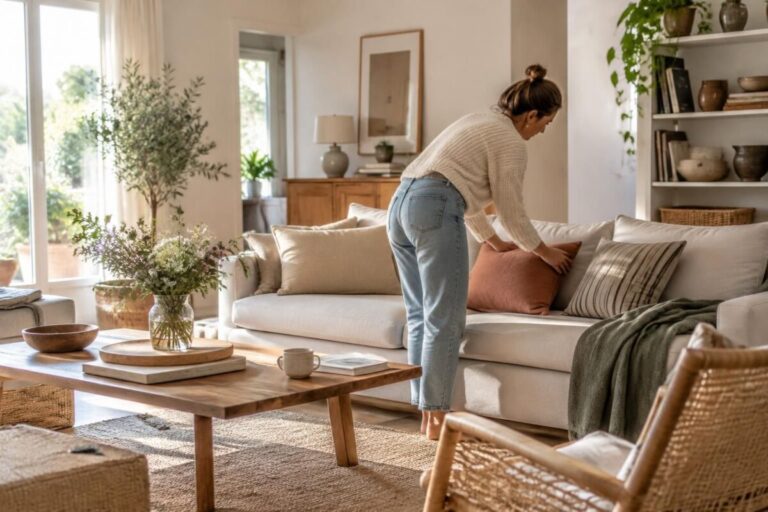
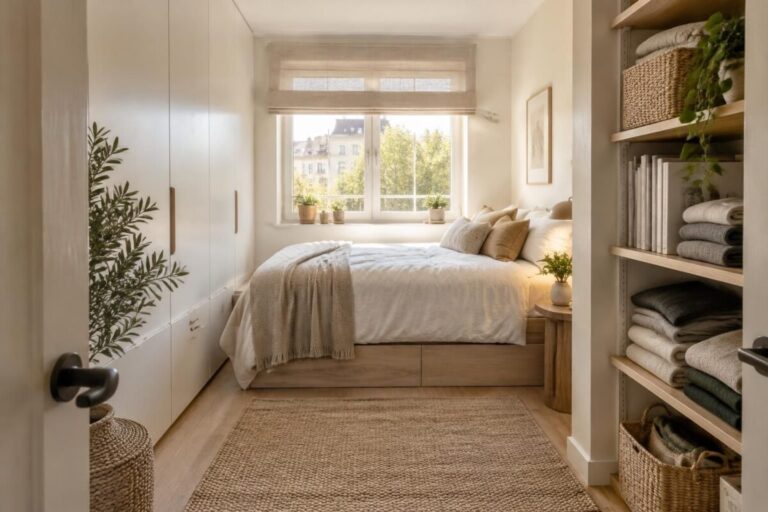
A basket can warm up a room, but several scattered models draw the eye in every direction. The right balance is about combining useful storage, easy movement and visual harmony.
What to do right away
- Keep two or three baskets visible in a room, depending on its size.
- Group together those with the same purpose instead of spreading them around.
- Choose a cohesive palette: two main materials or colors are enough.
- Remove empty baskets that have no specific purpose.
- Keep walkways clear to make the interior feel more open.
To make storage more decorative without accumulating objects, discover how to turn storage into decor and ways to keep a small living room feeling light.
Why too many baskets create visual clutter
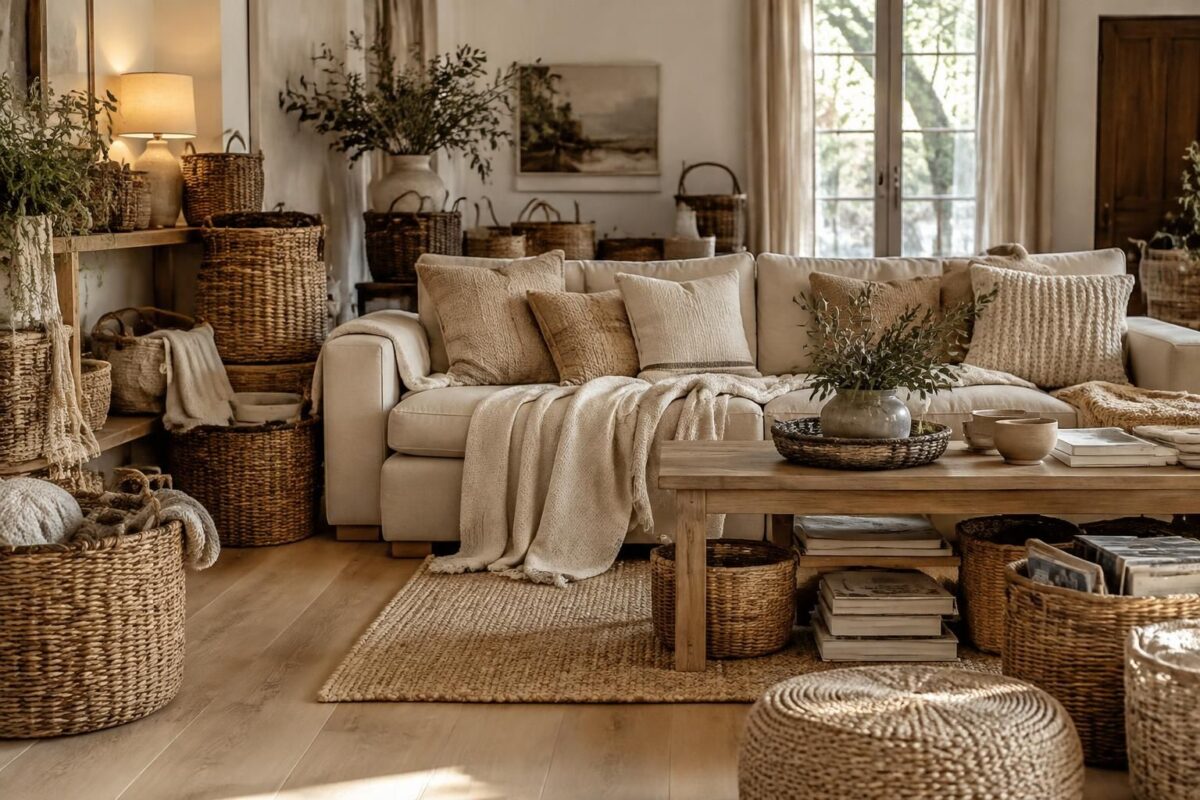
Each basket adds a shape, a texture and often a color. Even if they are all used for storage, having too many can make a room feel cluttered, especially when they are lined up on the floor or spread across several corners.
The problem rarely comes from a single basket. It arises when several containers compete for attention without forming a cohesive whole: light wicker near the sofa, dark fibers under a console table, printed fabric next to a shelf.
Useful containers, but not always the right fit
A large basket for throws may be enough in a living room. Adding smaller ones for remote controls, magazines and toys can sometimes create more focal points than practical solutions.
Imagine a living room where every item already has a visible container. By grouping accessories in one main basket and putting the rest in a closed cabinet, the room feels calmer without losing functionality.
Choose baskets to suit the space and their purpose
The ideal number depends on the size of the room, but also on what you need to store. In a small living room, one or two visible baskets may be enough; a larger room can accommodate a few more, as long as they are placed thoughtfully.
Minimalist decor doesn’t mean you have to hide everything. Instead, it encourages you to give each item a clear purpose: one basket for throws, another for toys, and closed storage for less decorative items.
| Need | Suitable solution | Desired effect |
|---|---|---|
| Sofa throws | A fairly large basket near the sofa | A practical, welcoming storage spot |
| Small everyday items | A discreet box or drawer | Fewer items visible on surfaces |
| Toys in the living room | A single, easy-to-reach container | Quick cleanup after use |
| Accessories used infrequently | A closet or closed cabinet | A visually lighter space |
For a cozy decor scheme, choose baskets that echo a material already found in the room, such as wood or linen. This repetition creates a visual thread, while too many different textures add to the visual clutter.
Reduce clutter without giving up storage
A common mistake is to buy a basket whenever something is left lying around. But adding more containers doesn’t always solve the problem: it can simply shift the clutter and take up floor space.
Before adding storage, check whether the items really need to stay in that room. Making the most of your space often starts with decluttering, followed by choosing a suitable place for everything.
A 3-step method to restore visual harmony
- Sort the baskets and their contents. Empty them, then separate what you use every day, what can be stored elsewhere and what you no longer need.
- Assign a purpose to each container. Make a mental note or add a label saying what it should hold; if two baskets serve the same purpose, combine their contents.
- Put them back together and take a look around the room. Keep the useful ones within easy reach, then move the others out of sight.
After this quick rearrangement, leave the room as it is for a few days. If you really miss a basket, its purpose will become clear; if you don’t, the extra space confirms that it wasn’t needed.
Decorative baskets in practice
Do they all need to match? Not necessarily. Two baskets with different shapes can work together if their color or material ties them together and each one serves a clear purpose.
In a narrow living room, place the basket near the piece of furniture it belongs with rather than in the middle of a walkway. This small detail keeps the room easy to move around in and helps create a cozy atmosphere without making it feel cluttered.
How many decorative baskets should you keep in a living room?
Start with one or two visible baskets in a small living room, then adjust based on the available space and how you use them. The most important thing is for each basket to have a clear purpose.
How can you stop baskets from creating clutter?
Group them in one area, limit the number of different styles and avoid leaving them empty or using them as temporary drop-off spots.
Should you choose baskets that all look alike?
No. Different models can work together if their colors or materials complement each other and you keep the number of baskets in check.
Thanks for stopping by! See you soon for a new article. — Julie