Furniture with open cubbies: stylish, but do they attract too much clutter?
Hi, it’s Julie.
Yes, a piece of furniture with cubbies can attract clutter, but a few simple rules are all it takes to keep open storage neat and pleasant.
It all depends on what you display and how much space you leave around your belongings. When thoughtfully arranged, it adds rhythm to your interior decor without turning the room into a cluttered display case.
Things to do right away
- Limit the contents of each cubby to a few carefully chosen items.
- Set aside some compartments for closed storage, using baskets or boxes.
- Group small items on a tray to keep them from spreading out.
- Leave some cubbies empty: they create a visual pause.
- Plan to dust quickly once a week, especially if the furniture is near a window.
If you’re still unsure about open furniture, this article on living with open furniture will help you assess how much upkeep it requires; for the entryway, also check out these ideas for stylish, practical entryway furniture.
If you like displaying your belongings, or mainly want to hide everyday clutter
If you enjoy books, ceramics, or souvenirs arranged with care, cubbies offer practical, customizable storage. They put decorative objects on display and give a wall character without adding lots of accessories.
If you’d rather hide chargers, papers, and odds and ends, a piece of furniture that’s entirely open may take more effort to keep tidy. Cubbies don’t create clutter by themselves: they simply make their contents visible, which can make visual clutter more noticeable.
Finding the right balance between open cubbies and hidden storage
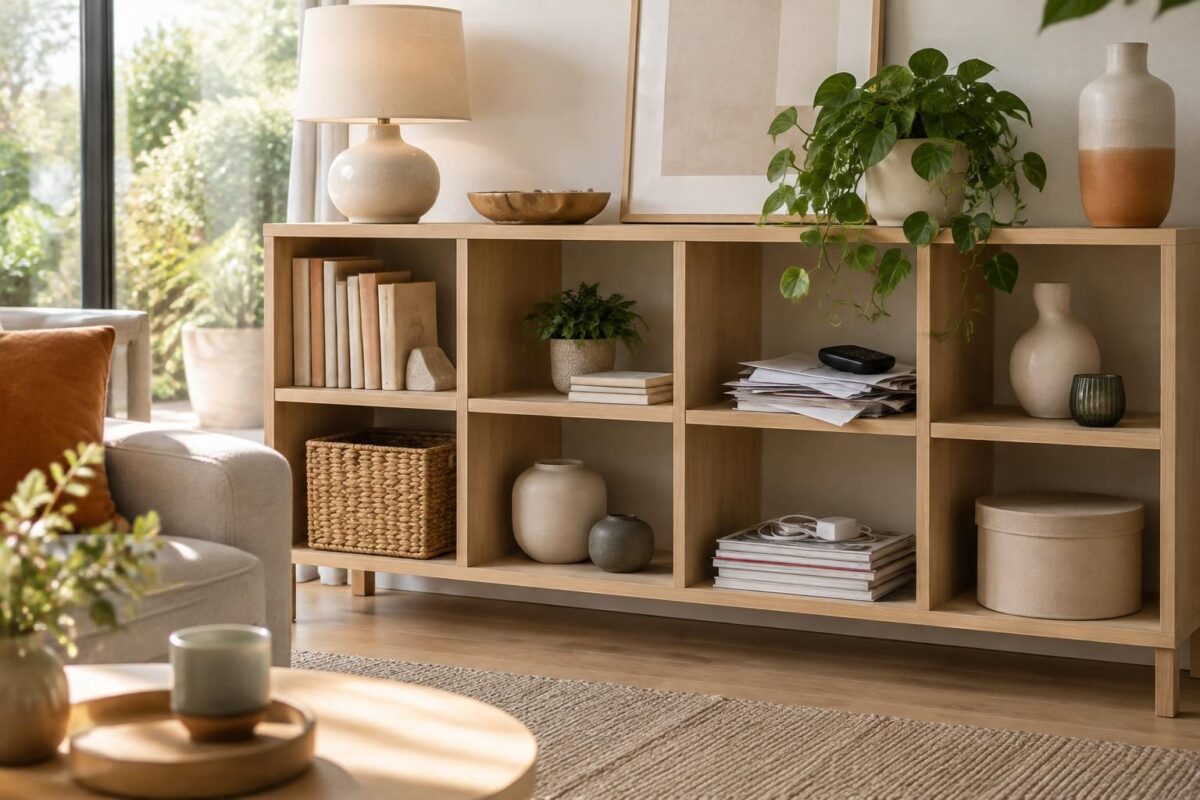
Picture Lina’s piece of furniture in her living room. She puts a few books and a vase on it, while the remote controls and cables stay in a closed basket. The furniture looks decorative while still meeting the needs of an organized home.
An easy rule to try is not to fill every compartment. Keep about a third of the cubbies empty or only lightly filled: this visual breathing room helps maintain a sense of calm, even when the furniture is used every day.
| Main purpose | Suitable solution | What to watch out for |
|---|---|---|
| Displaying a few items | Spaced-out open cubbies | Avoid scattering small items |
| Storing everyday accessories | Baskets or boxes in some compartments | Choose containers that are easy to grab |
| Creating a minimalist look | Few items and some empty cubbies | Don’t try to fill every space |
| Storage near a window or walkway | Items that are easy to clean and move | Dust and frequent buildup |
The pitfall of furniture with cubbies: wanting to fill every compartment
An empty cubby can look unfinished when you first buy the furniture. But filling every one often leads to a buildup of knickknacks, piles of mail, and items with no designated place. The result looks cluttered, even if everything seems to have its own compartment.
Dust is the other issue to keep in mind. Displayed objects make cleaning harder, especially when the cubbies are deep or numerous. If you’d rather spend little time on upkeep, display fewer items and reserve the open compartments for things that are easy to move.
Minimalism doesn’t mean an empty room: it’s about choosing what deserves to be seen. That’s what turns cubbies into an asset for interior design, rather than a collection of small objects.
Organize your cubbies in three steps
- Sort through the contents. Take everything out and separate the useful items, decorative pieces, and things that belong elsewhere. If an item has no function or personal value, there’s no need to put it in a cubby.
- Give each compartment a purpose. For example: books in one cubby, a basket for accessories, and a decorative object in another. A clear purpose keeps the furniture from becoming a temporary dumping ground.
- Review the arrangement after a week. Move anything that gets in the way and remove anything that has already become a pile. A few minutes of adjustment are often enough to restore a balanced look.
The best arrangement is one that’s easy to maintain day after day. If putting each item away takes a complicated maneuver, simplify what you keep there or add baskets.
Frequently asked questions about furniture with cubbies
How can I keep cubbies from looking cluttered?
Limit the number of items on display, group small accessories on a tray, and leave some cubbies empty. Baskets in a few compartments can also hide everyday items.
Is furniture with cubbies difficult to clean?
It needs regular dusting because surfaces and displayed objects collect dust. Less clutter and objects that are easy to move make cleaning quicker.
What should I put in living room cubbies?
You can put a few books, decorative objects, plants suited to the available light, or baskets for accessories in them. Keep small items grouped together to avoid a visually cluttered look.
Should I choose open cubbies or closed storage?
Open cubbies work well for items you want to display. Closed storage is better for assorted or less decorative belongings; combining the two often offers the best balance.
Thanks for reading! If this topic resonates with you, share your experience in the comments. — Julie