How to warm up the atmosphere of a cold space
Hi everyone, it’s Julie. To visually warm up a cold room, start with a comfortable rug, textured fabrics, and several warm lights, then add a shade that complements the floor. There’s no need to replace all the furniture: a few changes may be enough to make a tiled living room more inviting. However, keep in mind that warming up the atmosphere doesn’t mean heating the room.
The secret? Never let the coldness of the tile overpower the warmth of a lively home. Let’s see how every detail, from a plush rug to an LED floor lamp, can make all the difference. As I like to say, “Decor is silent poetry that tells our story.” So, ready to warm up your home?
Choosing the right colors to soften a cold space
Shades play a key role in how warm or cool a room feels. For example, gray tile with taupe or beige undertones instantly softens the overall look, unlike cooler shades such as bluish gray. For a living room with gray tile, a warm color palette such as terracotta, sand, or even mustard fits perfectly to create a welcoming atmosphere.
For example, with gray tile, try an ochre cushion and an off-white throw before repainting: you’ll see whether you like this palette in your living room’s actual lighting.
Here are a few colors to consider:
- Warm gray with taupe undertones
- Terracotta and ochre
- Sand and beige
- Mustard for bright accents
- Light wood for furniture
Choosing the ideal shade based on the room’s orientation
A south-facing room benefits from natural light that automatically warms up colors. For a north-facing room, however, choose a richer palette of warm shades and carefully planned lighting to compensate for the shade.
| Orientation | Recommended colors | Desired effect |
|---|---|---|
| South-facing | Beige, sand, taupe gray | Flattering light and softness |
| North-facing | Terracotta, mustard, light wood | Visual warmth and a welcoming feel |
For a north-facing living room, start with a small warm accent rather than painting an entire wall in a bold shade. Place the samples next to the tile: an orange-toned terracotta and a rosy beige will look different under your lamps.
Pairing natural materials and textiles for a cozy effect
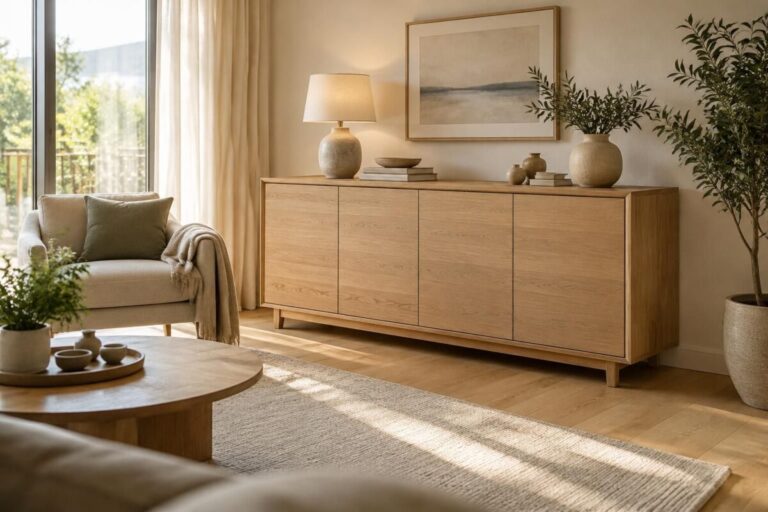
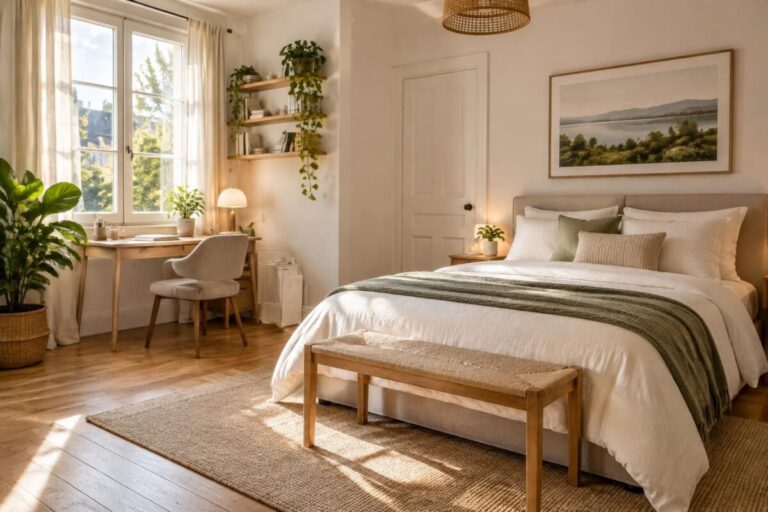
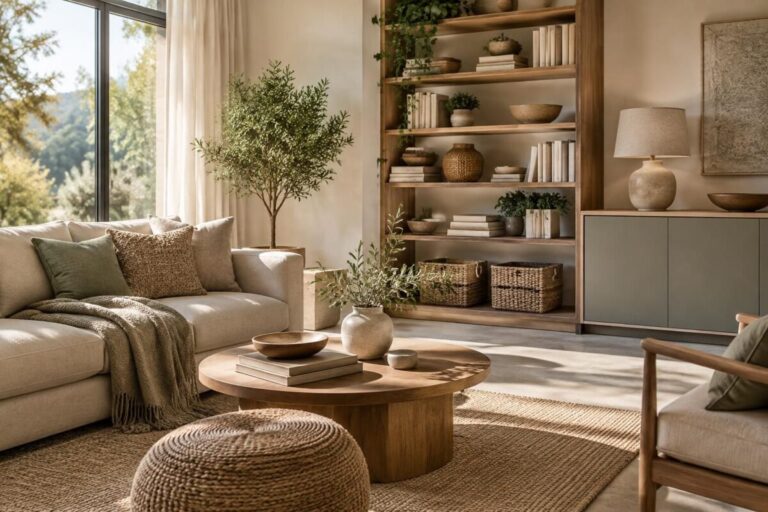
Wood, linen, and rattan are essential allies for balancing the cool modernity of tile. These natural materials instantly bring warmth and comfort to a home while adding a natural charm.
Proof that this combination works: the furniture and accessories collections at Maisons du Monde and AM.PM. are full of natural wood pieces paired with soft, welcoming textiles.
- Light solid wood furniture
- Thick natural-fiber rugs
- Velvet and wool cushions
- Light linen curtains to filter the light
- Rattan or wicker objects for an organic touch
Choosing textures to balance out the tile
The texture of fabrics and materials has a major impact on the atmosphere: a wool or woven sheepskin rug can completely change how a room feels, making a cold floor more welcoming. Don’t forget that touch also affects your mood!
| Texture | Effect | Example |
|---|---|---|
| Velvet | Warm and sophisticated | Cushions, armchair |
| Wool | Softness and comfort | Rugs, throws |
| Linen | Light and natural | Curtains, tablecloths |
Which rug and curtains should you choose for a living room with gray tile?
Start by choosing an area: in front of the sofa, a rug large enough to bring the seating together creates a more cohesive look than several small rugs scattered around. Check that it stays in place on the tile and is easy to clean. In a hallway or kitchen, choose a style suited to how the space is used rather than going for maximum thickness. For the curtains, let in the light you need and keep radiators unobstructed.
You can start with what you already own: move a throw, bring two seats closer together, and try placing a lamp near the armchair. The IKEA guide to warming up a room highlights, among other things, the role of textiles and lighting. There’s no need to buy a complete set before trying one small change.
Lighting: a key ally in warming up a cold interior
Without well-planned lighting, the atmosphere will always feel too cold, even in a carefully decorated living room. Using indirect light and table lamps from IKEA or Fermob with warm yellow bulbs instantly creates a cozy, enveloping atmosphere.
- Choose warm-light bulbs (2700 to 3000 Kelvin)
- Use multiple light sources: lamps, string lights, recessed spotlights
- Add an accent lamp to define a reading nook
- Use mirrors to amplify natural light
Creating focal points with lighting
Directing recessed spotlights toward key areas, such as a decorative picture or a velvet sofa, highlights the furniture while adding depth and life to the space. Use several well-distributed light sources to avoid a clinical feel.
| Type of lighting | Use | Effect |
|---|---|---|
| Indirect light | Table lamps, string lights | Soft, warm atmosphere |
| Recessed spotlights | Highlighting specific features | Depth and energy |
| Floor lamps | Reading or relaxation areas | Enhances the cozy feel |
Personalizing your space with decor, furniture, and plants to counter the cold
It’s not just about softening the tile, but about giving your room character. Adding greenery with plants such as a ficus or monstera brings the space to life. Scandinavian- or bohemian-style furniture paired with ethnic rugs from La Redoute Intérieurs adds energy to the space.
- Choose a style that feels like you: Scandinavian, bohemian, industrial
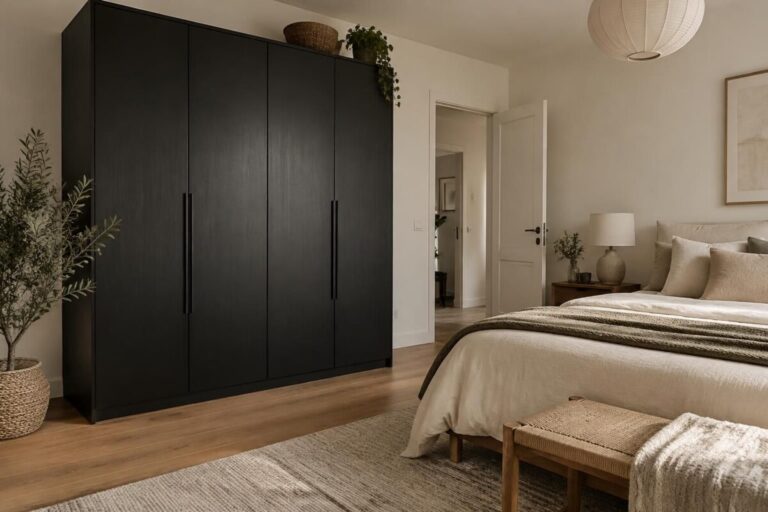
- Light or dark wood furniture, depending on the atmosphere you want
- Soft textiles: rugs, cushions, curtains
- Add several green plants to bring the room to life
- Subtle metallic accents: copper or brass for a sophisticated touch
Rearranging the space to maximize comfort without replacing all the furniture
A thoughtful layout plays a major role. Sometimes all it takes is moving a sofa, adding a rug under the coffee table, or putting a lamp in a corner to transform the room. This simple approach avoids clutter and unnecessary purchases before you’ve made the most of the furniture you already have.
| Action | Effect | Example |
|---|---|---|
| Move the furniture | Define areas more clearly | Sofa facing the window |
| Add rugs and cushions | More comfort and color | Mustard rug under the coffee table |
| Add lighting in the corners | Enhances the cozy atmosphere | Accent floor lamp next to the armchair |
What if the room is genuinely cold, even with the heating on?
Warm colors and light bulbs are no substitute for heating or insulation. If you’re looking to heat a room without a radiator, this article mainly offers ideas for decor and comfort underfoot. If you have drafts, damp, or persistent cold, look for the underlying technical cause rather than covering it up. Don’t block ventilation openings to keep warm.
To move from atmosphere to renovation work, the DIY and energy renovation advice from Maître Bricoleur can help you prepare for inspections and plan the work before adding the finishing decorative touches.
Which tile shade should I choose for a warm living room?
It’s best to choose a warm gray with taupe or beige undertones, which create a softer, more welcoming feel.
How can I pair gray tile with other materials to warm it up?
Pair the cool tile with natural wood, soft textiles such as rugs and curtains, and metallic touches in copper or brass for a warm effect.
Which plants should I choose to bring life to a tiled room?
Ficus, monstera, and succulents in stylish pots add color and life, breaking up the monotony of a gray floor.
What type of lighting should I choose for a cold tiled floor?
Warm lighting (2700K-3000K) from multiple sources, including table lamps, floor lamps, and recessed spotlights, creates a cozy atmosphere and offsets the cold feel.
Can I warm up a tiled room without replacing the furniture?
Absolutely. Rearranging the furniture, adding textiles, and choosing the right lighting are often enough to transform the atmosphere.
Thank you for reading. Warmly, Julie. P.S. Leave a comment; I’ll reply personally!