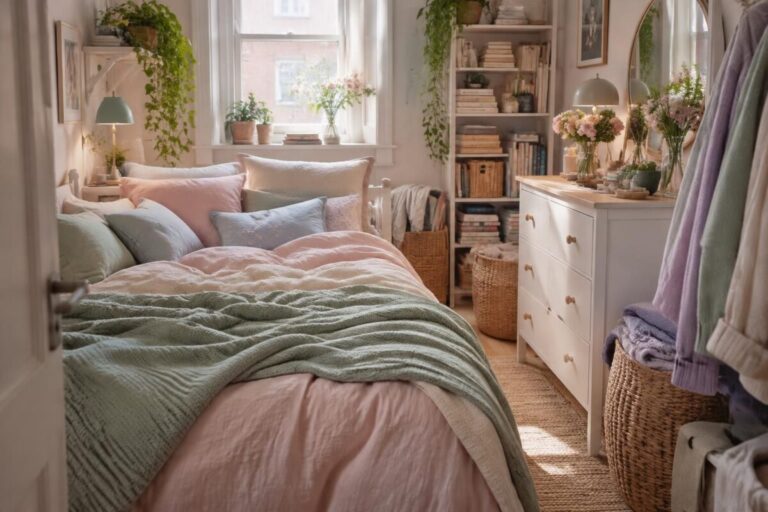
3 Colors That Make an Already Overcrowded Bedroom Feel Lighter
Hi, it’s Julie.
To make an already overcrowded bedroom feel lighter, go for off-white, pearl gray, or sage green, focusing on the most visible surfaces.
A color won’t make the furniture disappear, but it can soften its presence and help draw the eye around the room more evenly. The right choice depends mainly on the natural light and the colors already in the room.
What to do now to make an overcrowded bedroom feel lighter
- Identify the most cluttered area: the storage wall, bed, or desk area.
- Observe the light at different times of day.
- Choose a light color for the dominant walls.
- Save bolder colors for a few accessories.
- Test a sample on the wall before repainting the whole room.
To complement these ideas, also discover how bright colors can open up a bedroom and tips for keeping a small bedroom tidy without renovations.
Three colors that make a room feel more spacious
In a cluttered room, soft shades create visual continuity. They don’t replace storage, but they reduce the contrasts that draw the eye to every object.
| Color | Effect in the bedroom | Where to use it |
|---|---|---|
| Off-white | Brightens the room without feeling as cold as pure white. | Walls, ceiling, or bedding. |
| Pearl gray | Softens contrasts and pairs easily with furniture. | The wall behind the bed or curtains. |
| Sage green | Adds a natural touch without weighing down the palette. | One wall or a few accessories. |
Off-white, a light and easy-to-coordinate base
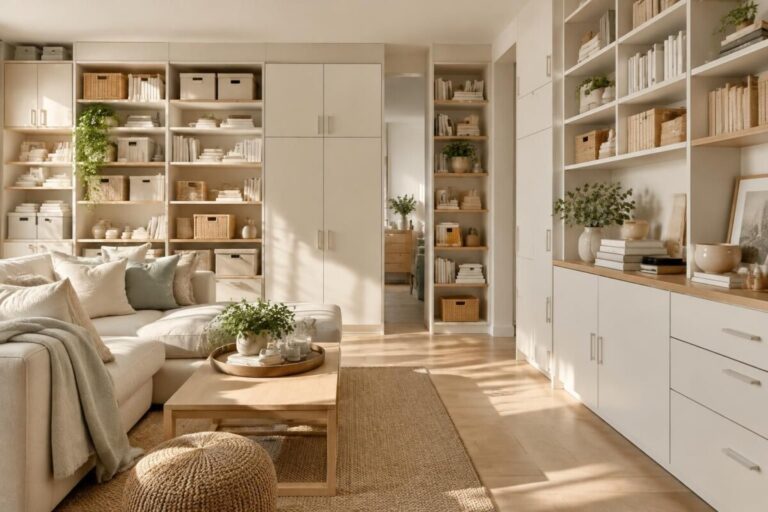
Off-white reflects light while retaining a warm undertone. It works well if the furniture is dark or if several materials share the room.
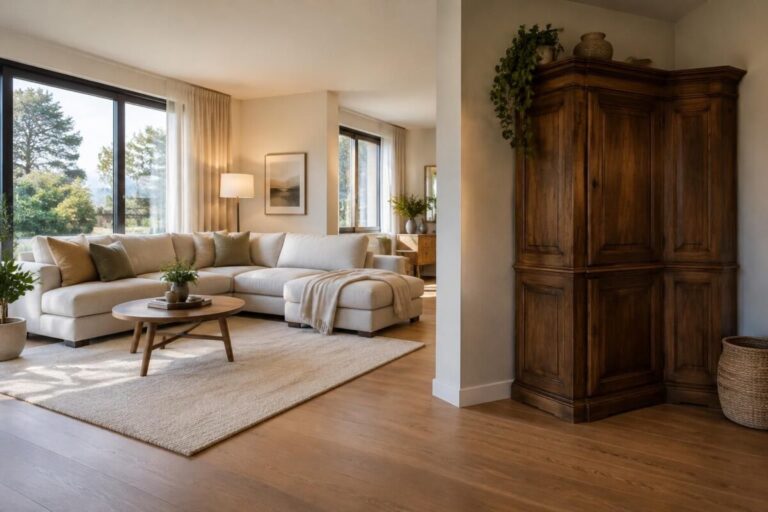
For example, off-white walls can soften a dark wood wardrobe and a crowded dresser. To avoid a look that’s too uniform, keep the textures visible: cotton, light wood, or natural fibers.
Pearl gray, to soften contrasts
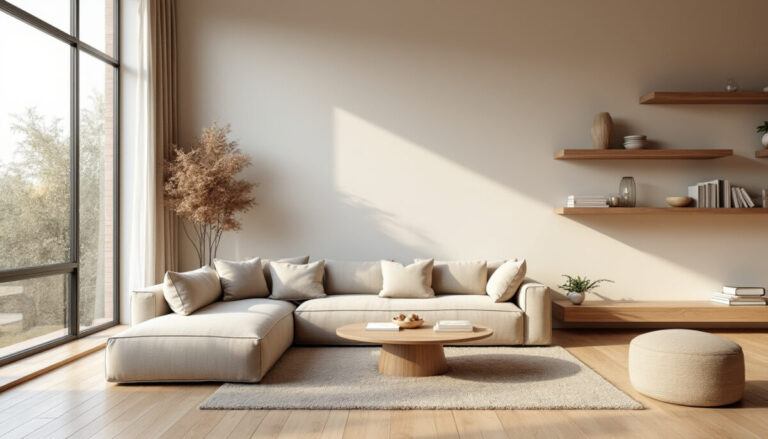
Pearl gray works well in bedrooms where white feels too bright. Its understated tone helps tie together elements in different colors, such as a headboard, curtains, and storage units.
In a room with little natural light, choose a light pearl gray and check how it looks in the evening. A shade that’s too cool can make the lack of light feel more pronounced.
Sage green, a soft touch that adds structure
Sage green adds character without creating as strong a contrast as a bright color. It can give the room a focal point, especially on the wall behind the bed.
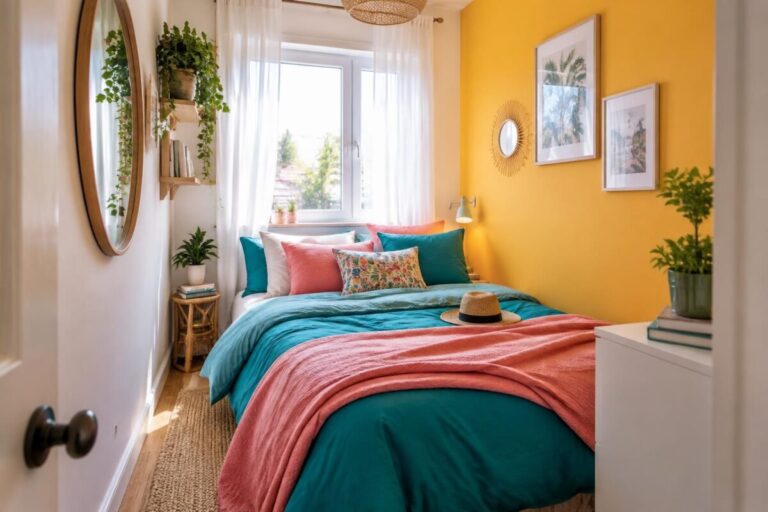
If you prefer a more colorful palette, pale blue, dusty pink, and soft yellow can also work. Use them in small touches: these pastel shades stay light when they aren’t used across every large surface.
Choose the right shade for the light and furniture
The same color can look different depending on the bedroom’s orientation and the bulbs you use. Before deciding, look at a sample in the morning, afternoon, and evening.
Imagine a bedroom with a large bed, a wardrobe, and a desk. If the furniture already stands out, a light color on the walls and a single accent shade for accessories can make the space easier to take in.
Common mistake: adding several accent colors to “liven up” the room. This creates more contrasts, and the bedroom can feel even more crowded. It’s better to choose a light base and limit accents to two or three objects.
Apply color in three steps
- Clear the visual clutter. Group objects by area and temporarily put away anything that doesn’t need to be on display. It’s easier to judge the color on a clear wall.
- Test two samples. Place them near the main furniture and compare how they look in different lighting. A small test helps you avoid a shade that’s too dark or too cool for the whole room.
- Paint the most visible surface first. Start with the dominant walls, then echo the color in textiles or accessories. This approach helps maintain a sense of space without redoing all the decor.
Color works best when it complements a more restful arrangement. A bright base, a few carefully chosen accents, and less cluttered surfaces come together to create a more relaxing space.
Frequently asked questions about colors for a cluttered bedroom
What color makes a cluttered bedroom look bigger?
Off-white is an effective base for reflecting light. Pearl gray and light sage green can also make the room feel lighter, depending on how much light it gets.
Can you use a dark color in a small bedroom?
Yes, but in small amounts, such as on an accessory or a detail. A large dark surface can draw the eye and make the room feel more crowded.
Does light beige work in a bedroom that’s already crowded?
Yes. Light beige creates a soft, warm base, especially if the furniture is made of wood. Choose a fairly bright shade and test it before repainting.
Should all the walls be painted the same color?
It’s not essential, but a uniform shade can reduce visual breaks. If you add an accent wall, choose a soft shade that’s close to the main palette.
I hope you found these tips helpful. See you soon! — Julie