
5 Furniture Mistakes That Waste Space Without You Realizing It
Hi, it’s Julie.
Furniture that’s too bulky, inefficient storage and blocked pathways can make you lose space without even realizing it.
In a small home, every choice matters: a sofa that’s the wrong size or a piece of furniture in the wrong spot is enough to make a room feel cramped. The good news is that a few adjustments can open things up without knocking down walls.
Good habits to adopt
- Measure the room and access points before choosing a piece of furniture.
- Choose multifunctional furniture to combine seating, sleeping and storage.
- Keep pathways clear and avoid automatically pushing every piece of furniture against the wall.
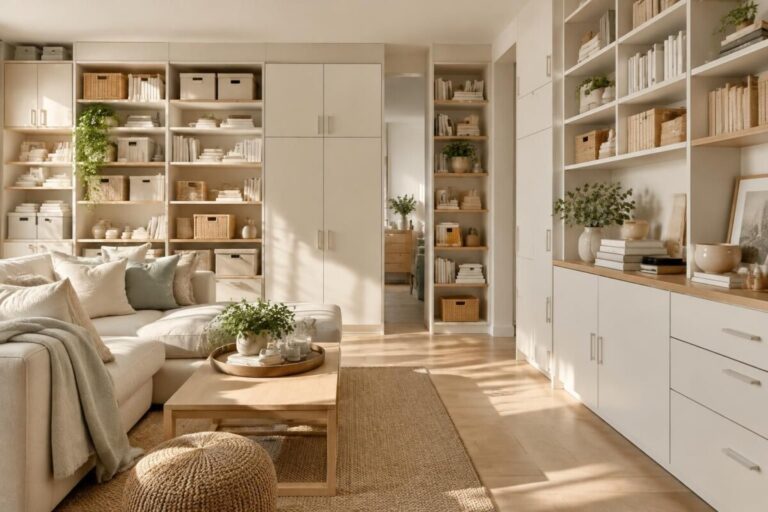
- Make use of vertical space with wall-mounted storage and furniture on legs.
- Start with the essentials, then add to your setup after a few weeks.
To refine your project, also check out these tips on which storage solutions to prioritize when space is limited and balancing tall furniture in a room.
5 furniture mistakes that waste space
1. Choosing furniture that’s too bulky
In a store, a large sofa often seems less imposing than it will in a compact living room. At home, it can narrow pathways, block a window and become the main cause of blocked circulation.
Measure the room, doors and stairs before you buy. A sofa should generally be no wider than two-thirds of the wall it sits against. If possible, leave about 60 cm of clearance around the main pieces of furniture.
A simple trick: mark out the furniture’s footprint on the floor with masking tape. You’ll immediately see whether it’s the right size before turning your living room into an obstacle course.
2. Forgetting about multifunctional furniture
In a small apartment, a piece of furniture that serves two purposes frees up floor space and reduces clutter. A sofa bed accommodates guests, a storage coffee table hides blankets, and an entryway bench can also hold shoes or bags.
This approach helps avoid unsuitable furniture: instead of adding a piece for every need, first think about which functions you can combine. The right choice isn’t measured by how many functions it has, but by how many you’ll actually use.
3. Pushing all the furniture against the walls
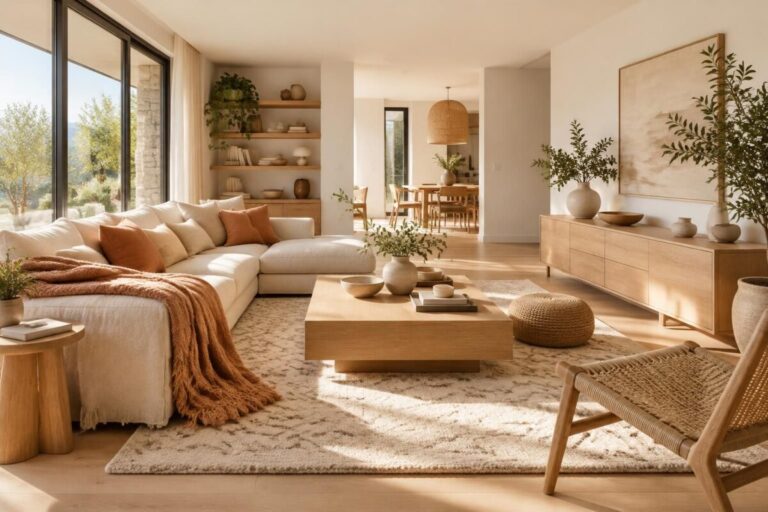
Pushing every piece of furniture to the edges may seem to clear the center, but this poor layout can make the room feel rigid and out of proportion. In an open-plan space, the sofa can also help distinguish the living area from the dining area.
Try pulling it 10 to 15 cm away from the wall, if the layout allows. This small gap creates a sense of depth; the key is to keep pathways easy to navigate every day.
4. Overlooking height and light
A tall, bulky piece of furniture placed near a window darkens the room and weighs down the decor. By contrast, low furniture on legs reveals more of the floor and gives the furniture a lighter look.
Use the walls to free up floor space: shelves, hooks or vertical storage can reduce unused space. Supplement the ceiling light with a lamp near the sofa and another in a dark corner; a mirror opposite a window can also help distribute natural light.
To keep storage from dominating the decor, you can explore these ideas on decorating mistakes that make a room feel smaller and layout mistakes that waste space.
5. Furnishing the whole apartment without a plan
Buying everything right after moving can lead to bulky furniture that doesn’t meet your needs. You may also end up adding lots of small storage pieces without solving the underlying problem: that’s how avoidable space loss sets in.
Start with the essential pieces, then observe your habits for a few weeks. You’ll discover where you need more storage, which pathways are too narrow and which areas are going unused. This step makes space optimization more precise than buying something in a hurry.
To compare solutions suited to small homes, also check out this guide to mistakes to avoid when furnishing a small apartment.
Which adjustment should you prioritize based on the problem?
Before replacing your furniture, identify what’s causing the most trouble: a narrow pathway, a lack of storage or a darkened room. The table can help you choose a targeted first step.
| What you notice | Possible cause | First adjustment |
|---|---|---|
| You often have to walk around the coffee table | Furniture that’s too wide or poorly placed | Choose a smaller size or clear the pathway |
| Items are left on every surface | Inefficient storage | Add a closed-storage or multifunctional piece |
| The living room feels dark and cramped | Tall furniture near the windows | Let in more light and choose low furniture |
| The center of the room seems empty, but the space feels cramped overall | Furniture pushed against the walls | Try an arrangement that defines different areas |
Reorganize the room in three steps
- Measure and observe. Note the dimensions, access points, windows and the pathways you use every day.
- Rearrange before you buy. Move a piece of furniture, remove anything that’s cluttering the space and test a new layout using tape on the floor.
- Add pieces based on your needs. Then choose a multifunctional piece or storage solution that addresses a specific problem.
This way, you can fix layout mistakes one at a time without piling on new temporary solutions. A well-designed home doesn’t necessarily need more furniture: it mainly needs choices that are better suited to the space.
Practical questions about furnishing a small space
How much space should you leave between pieces of furniture?
Try to leave about 60 cm around the main pieces of furniture, if the room allows. In high-traffic areas, the main thing is to make sure you can move around without having to move a chair or walk around a table.
Should you always choose low furniture for a small home?
Not necessarily. Low furniture works well near windows and in areas where you want to preserve natural light. For storage, also make use of vertical space with wall-mounted shelves, without overcrowding the walls.
How can you tell if a sofa is too big?
Compare its width with that of the wall, check the pathways around it and measure the access routes to the room. Marking out its footprint on the floor with tape lets you visualize its size before buying.
Which multifunctional furniture is useful in a small apartment?
A sofa bed, a coffee table with storage or a storage bench can meet several needs. Choose them based on how you’ll actually use them rather than adding functions you won’t use.
Thanks for reading! If this topic resonates with you, share your experience in the comments. — Julie