Calm atmosphere: this discreet storage really soothes the room
Hello, it’s Julie. A low, closed cabinet placed where clutter tends to build up creates a calm atmosphere without weighing down the room.
Keeping everyday items close at hand while out of sight, this discreet storage brings a sense of calm and serenity. The secret lies in its placement, proportions, and an organization that suits your habits.
Do this right away
- Identify the area where items accumulate most often.
- Choose a low, closed cabinet that fits the width of the wall.
- Set aside one compartment for a single category of items.
- Keep the fronts simple, in a shade close to the wall color.
- Keep the top of the cabinet clear, apart from one or two decorative objects.
To adapt this idea to small spaces, discover how to organize discreet storage in a small space and the visual effects explained in this guide to the impact of discreet storage on a room.
Why low, closed storage makes the living room feel calmer
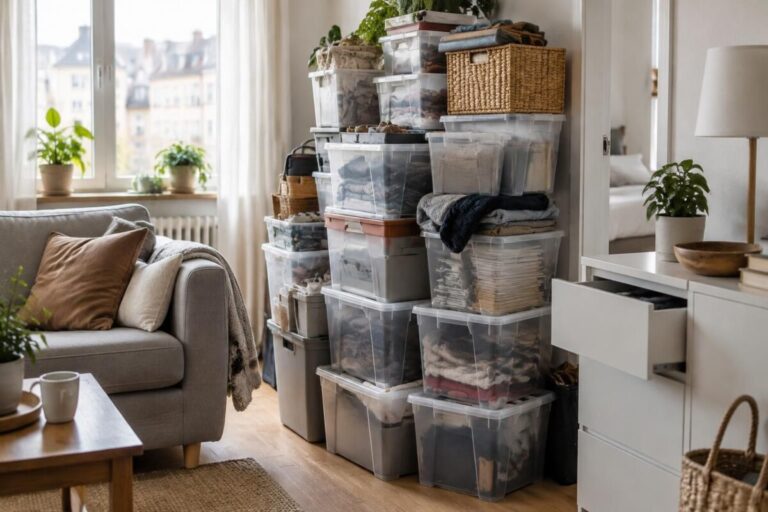
Small items left in view draw the eye and can make a room feel cluttered, even when it’s clean. A low, closed cabinet gathers them together without interrupting sightlines, making the room feel more open and streamlined.
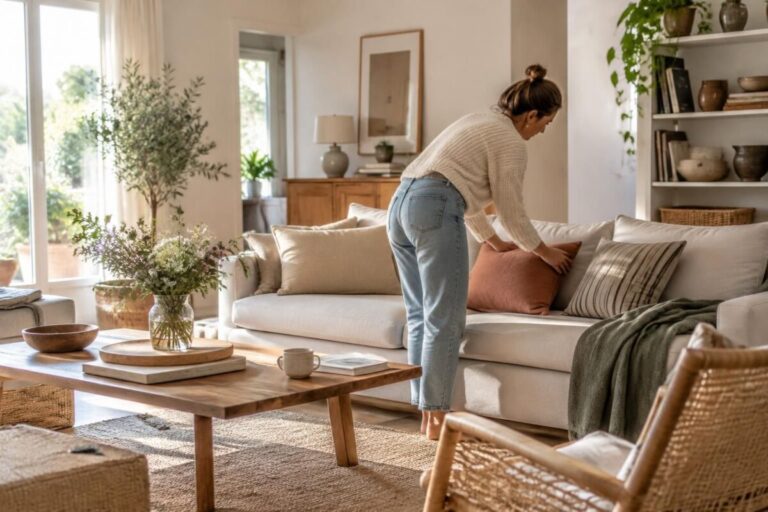
It also helps preserve the harmony of the decor. Remote controls, chargers, games, and papers have a place behind the doors, while a few books or a lamp can remain on display. The balance between hidden items and carefully chosen pieces creates a gentle atmosphere that promotes well-being.
Choose the right cabinet for your space
In a small living room, choose a shallow cabinet that’s long enough to group several categories together without adding lots of small storage units. In a larger room, a low sideboard can add structure to the wall while allowing the space to breathe.
For example, in a living room where children’s toys often end up near the sofa, a low cabinet with two or three compartments makes it easy to put them away quickly. It’s easier to feel at ease when everything has a simple, easy-to-find place.
Which discreet storage solution works best in each room?
The same principle works elsewhere, as long as you start with how the space is actually used. A storage bench makes coming home easier, while a closed cabinet near the bed helps keep the bedroom more restful.
| Room | Discreet storage | What it helps store |
|---|---|---|
| Living room | Low, closed cabinet | Games, remote controls, throws |
| Entryway | Storage bench | Shoes and extra bags |
| Bedroom | Under-bed drawers | Linens and seasonal items |
| Bathroom | Vanity unit with drawers | Products and accessories |
Add storage without weighing down the decor
A discreet cabinet shouldn’t become a bulky block. A matte finish, simple fronts, and a color close to the wall help it blend in naturally. If you choose wood, use a shade already present in the room to enhance the sense of harmony.
A common mistake is to fill every shelf and surface. Effective storage also leaves some space empty: that’s what gives the room an airy, calming feel.
Set it up in three steps
- Clear out the area. Separate the items to keep, relocate, donate, or recycle.
- Define the categories. Plan one compartment for each regular use, without trying to fit everything into the same space.
- See how it works over a few days. If an item is often left out, adjust its location or make it easier to put away.
This approach helps you avoid buying a cabinet before you know what you actually need. A well-planned system is less noticeable than clutter, but it makes a real difference in everyday life.
Practical questions about discreet storage
What cabinet should I choose to make a small living room feel calmer?
A low, closed cabinet that is shallow and proportionate to the wall is often a great choice. It hides everyday items without making the room feel visually cluttered.
How can I make storage less noticeable?
Choose simple, matte fronts in a color close to the walls. Also limit the number of items placed on top to keep the room streamlined.
Should I hide every item?
No. Keep a few carefully chosen pieces, such as a book or a lamp, on display, and put away accessories that create a cluttered impression.
How can I stop the cabinet from filling up too quickly?
Assign each compartment to a specific category and declutter regularly. If the storage is overflowing, reduce the number of items rather than immediately adding another cabinet.
Thanks for reading! If this topic resonates with you, share your experience in the comments. — Julie