Cosy ambience: this detail ruins the cosy retreat effect in the evening
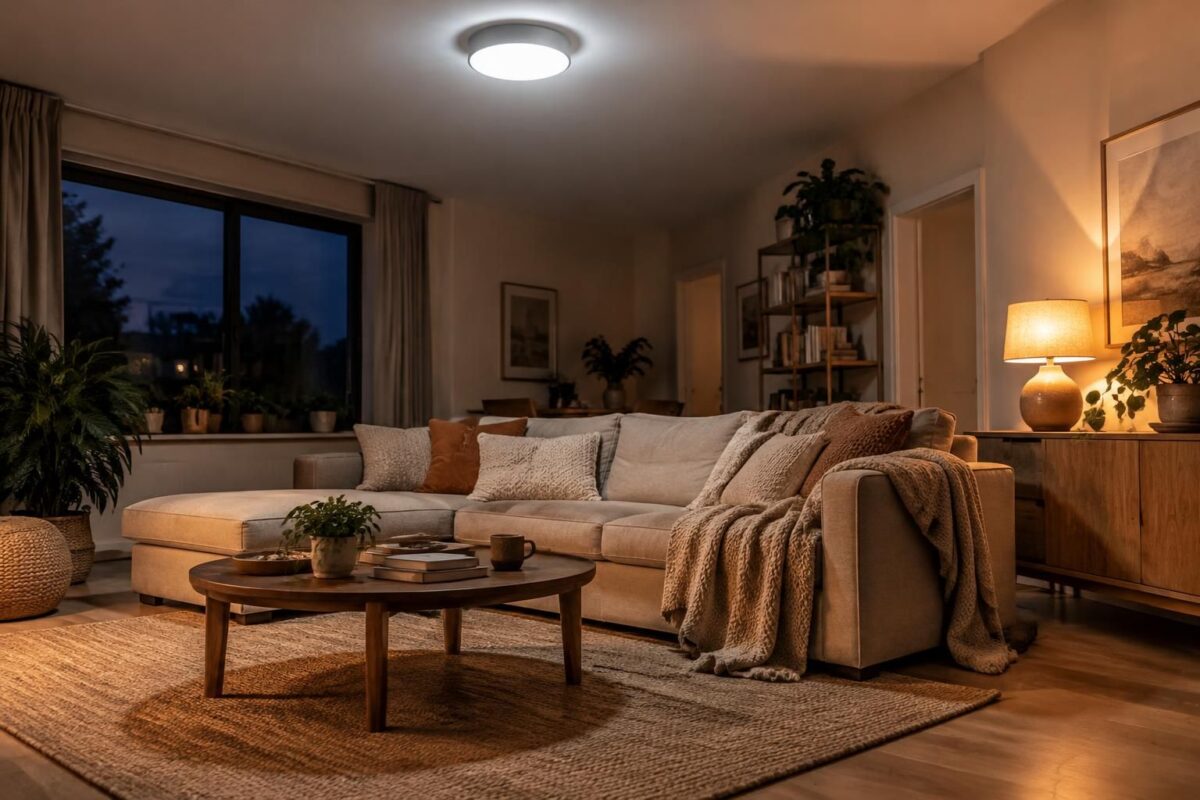
Hello, Julie here. The detail that often spoils the cozy feel in the evening is lighting that’s too cool or too bright. Even a beautifully decorated living room feels less welcoming when a white bulb lights up the whole room without any nuance. A few adjustments are all it takes to bring back a cozy, restful atmosphere.
Things to do right away
- Turn off the ceiling light if it gives off light that’s too bright or bluish.
- Choose a warm white bulb, around 2,700 K for a soft atmosphere.
- Turn on a lamp near the sofa or your favorite armchair.
- Direct the light toward a wall to make it less direct.
- Keep focused task lighting for reading or moving around without lighting up the whole living room.
Evening comfort also depends on the room’s overall balance: a poorly chosen white in your decor can make the whole space feel colder, while certain cozy colors that don’t darken a room enhance the sense of softness. Lighting then brings these choices to life—or works against them.
Why cool lighting spoils a cozy evening atmosphere
Uniform white light is more reminiscent of an office or hallway than a place to unwind. It makes contrasts sharper and soft materials feel less enveloping: wood, throws, and cushions seem to lose some of their warmth.
Light that’s too bright can also increase eye strain, especially when the surrounding room is dark. The bulb itself isn’t necessarily the only problem: a powerful ceiling light in the middle of the room can create harsh lighting, even if its color is relatively warm.
The right color temperature for a warmer atmosphere
In the evening, a bulb around 2,700 K generally gives off warm light. A color temperature close to 3,000 K can work if you want to keep things a little brighter, especially in a multipurpose room.
By contrast, bluish or very white light often feels cooler. It doesn’t need to be avoided everywhere: it can be practical for working or cooking, but it’s less suited to a moment of relaxation.
From a single ceiling light to soft lighting
Picture Léa’s living room: in the evening, she turns on the ceiling light to read on the sofa. The room becomes bright and clear, but the cool atmosphere takes over. By adding a lamp near the armchair and another aimed at a wall, she keeps one area well lit without lighting up the entire space.
The idea is simple: it’s better to spread the light around than to rely on one powerful source. Several low-intensity light sources add depth and let you adapt the room to each activity.
| Need | Recommended lighting | Desired effect |
|---|---|---|
| Relaxing | Warm-lit accent lamp | Soft, enveloping atmosphere |
| Reading | Adjustable lamp near your seat | Comfortable reading without glare |
| Moving around | Indirect lighting or a small lamp for the hallway | Visual cues without lighting the whole room |
| Working | More neutral light directed toward the desk | A functional area separate from the relaxation space |
Three steps to improve your living room lighting
Before changing all your decor, observe how the light behaves after sunset. Sometimes a small adjustment to the position or brightness is enough to make the room feel more welcoming.
- Identify the source of the problem. Sit where you like to relax and check whether a bulb is in your line of sight or the ceiling light dominates the whole room.
- Soften the light. Replace the cool bulb with a warm-toned one, or add a lampshade that diffuses the light instead of letting it shine directly into your eyes.
- Create two or three points of light. Place one lamp near the sofa, another in a dark corner, and, if needed, focused lighting for reading.
For a quiet evening, turn off any lights you don’t need. Soft lighting adds depth to the room without plunging it into uncomfortable darkness.
Frequently asked questions about cozy evening lighting
What bulb should I choose for a cozy atmosphere?
A warm white bulb around 2,700 K works well for most relaxing moments. For reading, pair it with an adjustable lamp.
Should I avoid using the ceiling light in the evening?
No. It’s still useful for cleaning or moving around, but avoid making it your only light source when you’re relaxing.
How can I tone down light that’s too bright without changing the bulb?
Add a lampshade, point the lamp toward a wall, or use lower-powered accent lights to spread the light around.
Does cool light always cause eye strain?
Not necessarily. Discomfort also depends on brightness, how long you’re exposed to it, and the contrast with the rest of the room. In the evening, less direct light is often more comfortable.
Thanks for stopping by! See you soon for a new article. — Julie