Warm style: the mistake that makes a home feel too heavy
Hi, it’s Julie.
To keep a warm style from making your home feel heavy, limit clutter and let materials, colors, and furniture breathe.
A room can feel stifling even with beautiful objects: the problem often comes from how many there are and how often they’re repeated. A few well-balanced choices are enough to create a cozy atmosphere and a welcoming home.
Try this now
- Remove three objects from an already crowded shelf or table.
- Keep one dominant material, such as wood, then add contrast with linen or ceramic.
- Reserve warm colors for a few accent points rather than repeating them everywhere.
- Clear the surfaces around windows to preserve natural light.
- Leave some areas empty: they add depth to the decor and give your eyes a rest.
To put a look together without creating visual clutter, check out these tips for creating a warm style without overdoing it and this discussion of the place of wood in every room.
The decorating mistake that makes a home feel too heavy
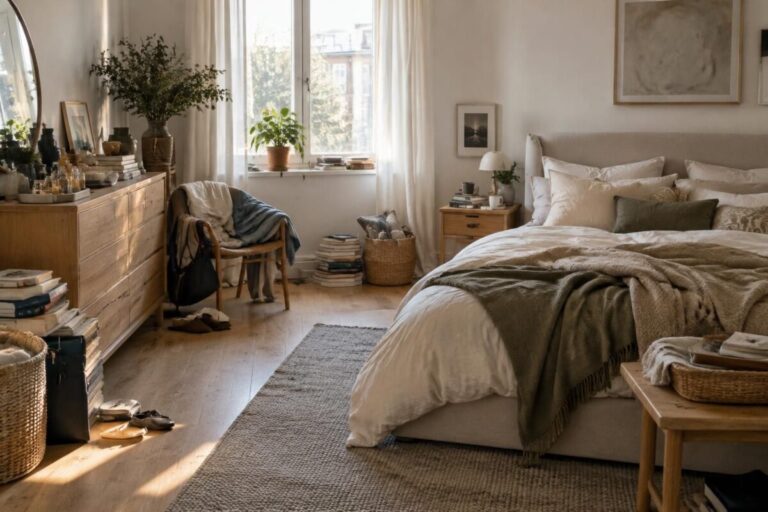
A common mistake is to equate warmth with clutter: more cushions, throws, framed pictures, and wooden furniture. But when the same colors and textures are repeated everywhere, the interior decor loses its balance.
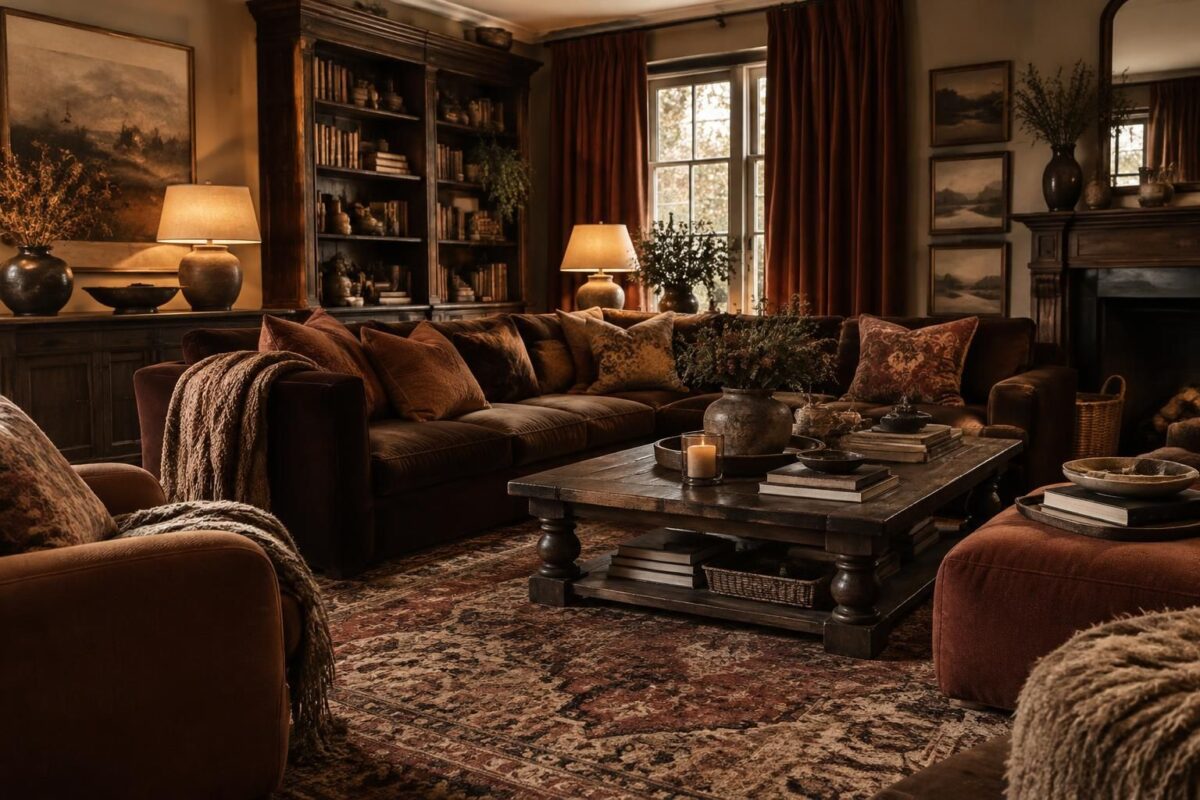
Imagine Camille, who adds brown accessories and dark furniture to make her living room cozier. She likes each item on its own, but together they absorb the light and make the room feel less defined. Warmth comes from contrast and cohesion, not quantity.
Balance materials and warm colors
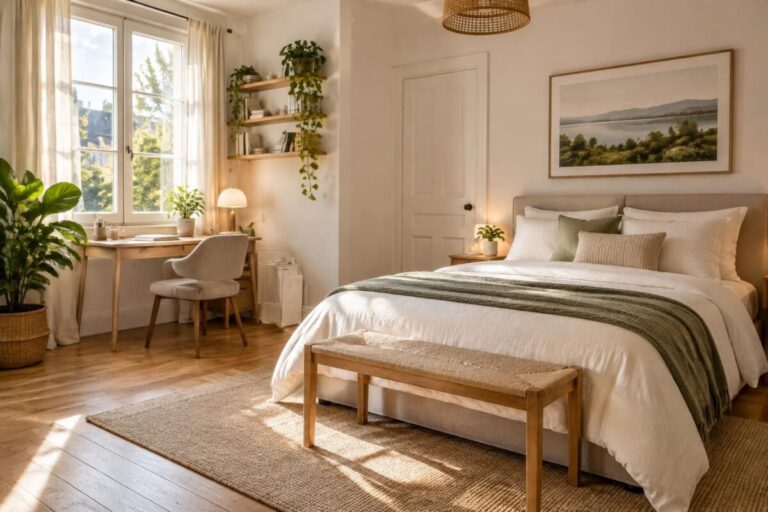
A welcoming interior can bring together wood, textiles, and a few metallic details, as long as you vary the textures. A linen sofa, a subtle rug, and a light wood table create a lighter harmony than several bulky, dark surfaces.
For colors, choose a calm base—cream, beige, or off-white—then add one or two warm shades, such as terracotta or caramel. This balance creates a cozy atmosphere without dimming the room. A well-placed accent catches the eye better than a color repeated in every corner.
| Element | Risk of making the room feel heavy | A more balanced alternative |
|---|---|---|
| Dark wood | Repeating it on furniture, floors, and accessories | Limit it to one or two statement pieces |
| Cushions and throws | Adding too many bulky items and patterns | Choose a few textiles with different textures |
| Wall decor | Filling every wall | Create a focal point and leave some areas bare |
| Warm colors | Using them on every large surface | Add small touches against a light base |
Three steps to lighten up a warm decor scheme
Before buying a new accessory, look at the room from the entrance. This viewpoint often reveals repetition and areas that feel too crowded.
- Declutter. Temporarily remove objects that look alike or crowd the surfaces. Then put back only those that serve a purpose or have real decorative value.
- Rebalance the volumes. If one piece of furniture is imposing, pair it with lighter elements and keep a clear walkway. A clear path through the room makes it more pleasant to use every day.
- Test the lighting. Look at the living room in the morning and evening. If the colors seem dull, add a light source or move a piece of furniture blocking the window before changing the entire palette.
This method helps you fix the decorating mistake without starting from scratch. A good rule of thumb: every object should contribute to how the room is used, the balance of materials, or the harmony of the interior.
Frequently asked questions about warm style
How can I make a living room feel warm without cluttering it?
Keep a neutral color base, choose a few complementary materials, and leave surfaces clear. A few well-placed accents are enough to create a cozy atmosphere.
Which warm colors should I choose for a small room?
Choose soft shades such as beige, light terracotta, or caramel in small touches. A bright base helps preserve a sense of space.
Should all wooden furniture match?
No. Different types of wood can work together if their shades are compatible and the other materials create a visual connection. Above all, avoid adding too many dark pieces to a room with little natural light.
How can I spot visual clutter?
If your eye doesn’t know where to rest, surfaces are covered, or the same textures appear everywhere, remove a few items and reassess the room.
Thanks for reading! If this resonates with you, share your experience in the comments. — Julie